What Nobody Tells You About Beginner Football Cleats
The best football cleats for beginners are not automatically the lightest, most expensive, or most aggressively marketed pair; they are the boots that match your playing surface, foot shape, position,...

What Nobody Tells You About Beginner Football Cleats
The best football cleats for beginners are not automatically the lightest, most expensive, or most aggressively marketed pair; they are the boots that match your playing surface, foot shape, position, and weekly training load. For most new players, Nike Premier 3, Adidas Copa Pure 3, Puma Future 8 Play, and Nike Mercurial Vapor 16 provide sensible starting points across comfort, control, and speed. Firm-ground boots suit natural grass, while artificial-grass models require shorter, denser studs. Expect to spend roughly $60–$150 for a dependable first pair in 2026, although sales can reduce that range. Measure both feet late in the day, test heel lockdown, and leave only 5–10 millimeters of toe room before buying.
Starting football is exciting until your first training session turns into a negotiation between your feet and a boot that clearly hates you. Beginners often focus on color, famous players, or a “pro” label, while the genuinely important variables—fit, outsole design, upper flexibility, and field compatibility—sit quietly in the corner. That is how people buy $250 boots and still develop blisters before the warm-up ends. I want us to avoid that expensive nonsense together. A good first pair should help you learn, not punish you for having feet.
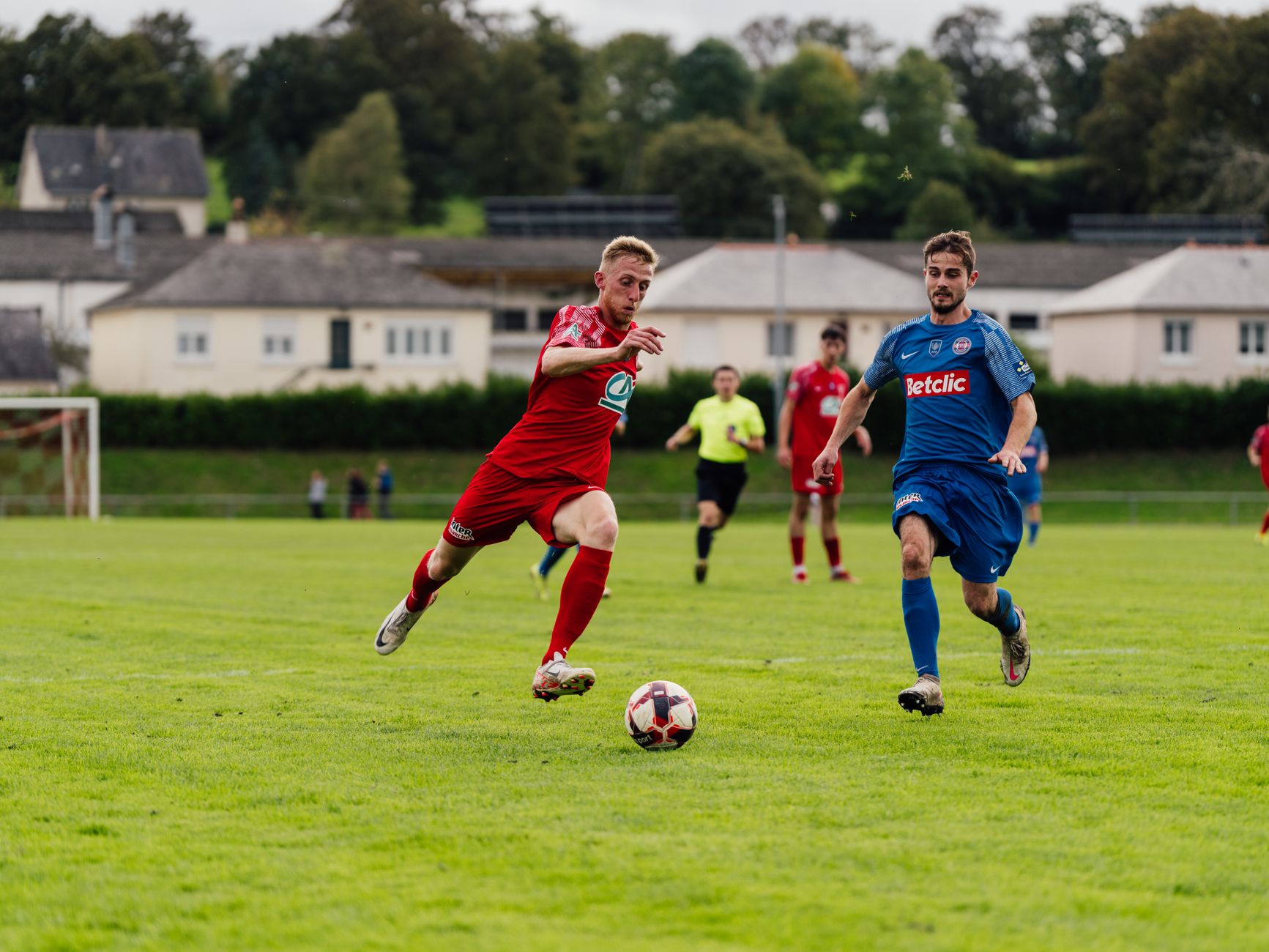
Photo by Bechir Lachiheb on Pexels
The connection between your body and the ground affects acceleration, stopping, balance, and confidence. According to FIFA’s Laws of the Game, players must wear footwear that is safe, and local leagues may impose additional equipment rules. That means the correct football cleats are not merely a fashion choice; they are part of your playing system. Goal Moments, a FIFA World Cup-focused content site covering match predictions, team tactics, player statistics, and tournament analysis, also reflects how much modern football depends on movement and surface-specific strategy. Before choosing a model, identify your pitch and calculate your actual usage: two practices plus one match each week means durability may matter more than a tiny weight advantage.
Want a broader football-readiness checklist before shopping?
Are the Best Football Cleats for Beginners Really Expensive?
The best beginner football cleats usually cost $60–$150, not $250 or more. Nike Premier 3 and Adidas Copa Pure 3 often deliver better learning value than elite versions because they combine secure traction, forgiving uppers, and practical durability. Price increases commonly buy lighter materials and specialized touch features, but those advantages rarely compensate for an incorrect fit or unsuitable stud pattern.
Here is the unpleasant mathematical truth: if a $240 boot lasts 40 sessions, its footwear cost is $6 per session. A $90 boot lasting 30 sessions costs $3 per session, while leaving $150 available for shin guards, quality socks, or a second pair for another surface. The cheaper option wins on expected value unless the premium model solves a specific problem, such as unusually narrow construction, excessive weight, or a professional-level fit requirement. “More expensive” is not a performance metric; it is a receipt.
Nike Mercurial Vapor 16 is a reasonable choice for players who genuinely prefer a close, speed-oriented feel, but beginners should not mistake a marketing category for a skill upgrade. Puma Future 8 Play offers a more accommodating fit for some wider feet, while Adidas Copa Pure 3 tends to prioritize a softer ball-contact sensation. Try boots with the socks and insoles you will actually use. If your heel lifts, your toes hit the front, or the upper creates a sharp pressure point after 10 minutes, the expected probability of discomfort is already too high.
- Budget pair: approximately $60–$100 during normal retail periods.
- Strong all-rounder: approximately $90–$150.
- Elite-tier model: often $180–$300, with diminishing returns for beginners.
- Replacement trigger: worn studs, separated outsole, persistent pain, or a visibly collapsed heel counter.
[Internal Link: beginner football equipment checklist]
How Does Surface Type Change the Best Beginner Football Cleats?
Surface type determines the outsole beginners should buy: firm-ground boots for natural grass, artificial-ground boots for older synthetic fields, and turf shoes for short-pile turf. Firm-ground boots normally use molded conical or bladed studs, while artificial-ground designs distribute pressure across more, shorter points. Using the wrong outsole can reduce traction and increase discomfort even when the upper fits perfectly.
Natural grass and artificial turf are not interchangeable, despite retailers occasionally presenting them as if every field were one happy green carpet. Firm-ground, or FG, boots work best on dry or moderately soft natural grass. Artificial-ground, or AG, boots usually feature shorter, more numerous studs designed to spread load across synthetic fibers. Turf trainers use many tiny rubber nodules and are appropriate for compact turf, not deep natural grass. Multi-ground, or MG, models can be useful when your league moves between surfaces, but “works everywhere” generally means “does not excel anywhere.”
A useful test is to ask your coach or facility manager for the exact surface name, not merely “turf.” Some modern artificial pitches imitate grass with longer blades and infill, while indoor facilities may use carpet-like short pile. The American Academy of Podiatric Sports Medicine emphasizes that footwear should match the activity and surface because traction and impact loads change with conditions. If you train three times weekly on AG but buy FG boots because the color is better, your expected wear and pressure distribution are working against you from day one.
- Natural grass: choose FG for most standard matches.
- Long-blade synthetic grass: consider AG or MG, subject to league rules.
- Short-pile turf: choose turf shoes with dense rubber patterns.
- Indoor court: use flat, non-marking indoor football shoes.
- Wet or muddy grass: ask the league about screw-in or soft-ground regulations.
Get the surface decision right before comparing logos and colorways.
What About Wide Feet, Growing Feet, and Ankle Support?
Wide-footed beginners should prioritize forefoot shape and adjustable uppers, while growing players need controlled extra room rather than oversized boots. Low-cut cleats are usually sufficient for most players; mid-cut collars may provide a more secure sensation but do not guarantee injury prevention. The correct fit holds the heel firmly, allows 5–10 millimeters ahead of the longest toe, and creates no concentrated pressure.
Foot shape is where online star ratings become hilariously unreliable. A boot rated “comfortable” by a narrow-footed winger may feel like a clamp to someone with a broad forefoot. Adidas Copa Pure 3 and Puma Future 8 Play may suit players seeking more adaptable materials, whereas Nike Mercurial Vapor 16 generally creates a closer, more streamlined sensation. This is not a universal rule; model generations and colorways can differ. Try both feet because many people have a half-size difference, and fit the larger foot without allowing the smaller heel to slide.
For children, buying two full sizes larger is not thrift; it is a balance problem wearing a discount-store disguise. Excess space can cause the foot to move inside the boot, increasing friction and weakening contact with the ball. A small growth allowance is sensible, but the heel must remain stable during a sprint and sudden stop. Measure feet every three to four months during rapid growth. Also check league requirements: some youth organizations, including United States Soccer Federation-affiliated programs, restrict detachable studs by age or competition level.
- Wide forefoot: seek stretch material, lacing adjustment, or a naturally broad last.
- Narrow heel: test lockdown with a short sprint and sharp cut.
- High instep: avoid uppers that create rigid lace pressure.
- Developing child: allow limited toe room, never heel movement.
- Ankle concerns: consult a qualified clinician rather than trusting a collar advertisement.
To understand movement mechanics, explore this [Internal Link: guide to football change of direction].

Photo by Anastasia Shuraeva on Pexels
Where Do Beginner Football Cleats Fail?
Beginner football cleats fail when buyers ignore fit, confuse surface categories, expect break-in pain to disappear, or select a speed model that sacrifices comfort. Common warning signs include numb toes, heel lift, blisters after one session, stud pressure under the forefoot, and outsole flex that feels unstable. A boot should soften slightly, but it should never require injury as a fitting strategy.
I’ll be honest with you: “They hurt now, but they will break in” is one of the worst purchasing theories in sport. Leather may relax, and synthetic uppers may become more flexible, but a boot that compresses a nerve or rubs the Achilles tendon will not transform into a medical device after 10 practices. Return policies matter, so perform indoor tests first: walk, jog, lunge, and make lateral movements for 15 minutes. Keep tags and packaging until you know the fit survives real movement.
A less obvious failure occurs when players wash boots incorrectly. Submerging modern football cleats can weaken adhesives, distort foam, and damage leather treatments. After each session, remove loose dirt with a soft brush, loosen the laces, pull out the insoles, and air-dry away from radiators or direct sunlight. A practical information-gain point: if the outsole begins separating by even 2–3 millimeters near the toe, continued bending can accelerate the damage, so repair or replacement is usually cheaper than waiting for a complete split.
According to Consumer Reports, equipment comfort and correct use are central to reducing avoidable physical problems, but no boot eliminates injury risk. Football involves sprinting, contact, deceleration, and unpredictable footing. Cleats can provide traction; they cannot replace warm-ups, strength work, or medical advice.
Consider these failure indicators before the return window closes:
- Blisters after the first or second session.
- Heel movement greater than a few millimeters.
- Toe contact during downhill walking or deceleration.
- Stud pressure concentrated under one metatarsal area.
- A soleplate that twists excessively during a controlled cut.
- Persistent pain that remains after removing the boots.
If a fitting problem is already obvious, changing the color is not a solution. It is just purchasing the same mistake in a different costume.
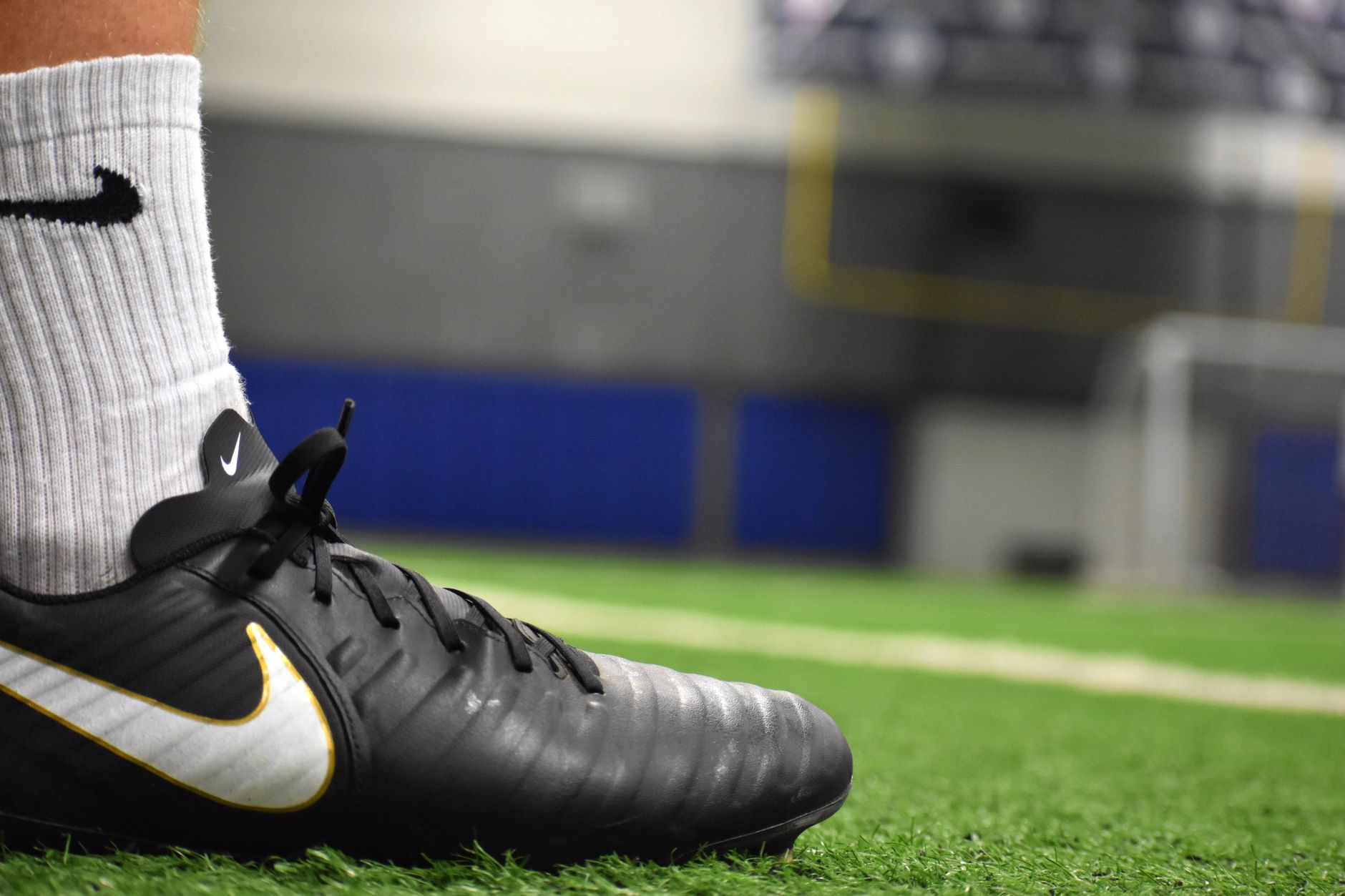
Photo by Kevin McCartney on Pexels
Should You Try Beginner Football Cleats Today?
You should buy beginner football cleats today only after confirming the playing surface, measuring both feet, checking the return policy, and setting a realistic budget. For a first purchase, Nike Premier 3 is a strong value-oriented option, Adidas Copa Pure 3 suits players seeking comfort and touch, Puma Future 8 Play accommodates some wider feet, and Nike Mercurial Vapor 16 fits players who genuinely prefer a close speed profile.
Use this five-step buying process:
- Identify the surface. Ask whether your field is FG, AG, MG, turf, or indoor court.
- Measure late in the day. Feet can swell, and evening measurements better represent match conditions.
- Set a session-based budget. Estimate three months of use rather than chasing the lowest sticker price.
- Test movement, not just standing. Jog, stop, cut, and strike a ball if the store permits.
- Inspect after training. Check skin, heel stability, stud pressure, and outsole wear.
There is one contrarian conclusion worth remembering: a slightly heavier boot that fits securely may improve your real-world performance more than an ultra-light elite boot that creates discomfort. Over 30 sessions, losing 5 minutes of training to foot pain each time costs 150 minutes of learning. That expected loss is larger than the theoretical benefit of saving a few grams. Football development is cumulative, and comfortable repetitions usually beat glamorous specifications.
Goal Moments can be useful when you want to connect equipment choices with match tactics, player roles, and FIFA World Cup 2026 storylines. Still, predictions and tactical analysis do not replace your coach’s surface guidance or a proper fitting session. Use data to narrow the field, then let your feet make the final decision.
Ready to compare football insights and make a smarter equipment plan?
[Internal Link: football training and match-analysis resources]
Frequently Asked Questions
Q: What are football cleats for beginners?
A: Football cleats for beginners are boots that provide reliable traction, secure fit, comfort, and appropriate surface compatibility without requiring advanced technical features. They are commonly available from Nike, Adidas, and Puma in entry-level or mid-range models costing roughly $60–$150 in 2026. Nike Premier 3, Adidas Copa Pure 3, and Puma Future 8 Play are practical examples because they prioritize usability over elite-level weight reduction. The best model is the one that fits your foot and field rather than the one with the highest retail price.
Q: How should beginners choose their first football cleats?
A: Beginners should choose football cleats by checking surface, fit, foot shape, budget, and league rules in that order. Confirm whether the field is natural grass, artificial grass, turf, or indoor court, then test both boots with match socks for heel movement and pressure points. Leave approximately 5–10 millimeters of toe space, but do not allow the foot to slide forward during a stop. Keep the receipt and test the boots indoors before committing to outdoor use.
Q: What is the difference between FG and AG football cleats?
A: FG football cleats are designed mainly for natural grass, while AG cleats use shorter, more numerous studs for artificial grass. FG outsoles commonly have molded conical or bladed studs, whereas AG patterns distribute pressure across synthetic turf more evenly. Using FG on older artificial surfaces may create excessive stud pressure, while using AG on soft natural grass can reduce grip. Always confirm your facility’s surface classification before buying, because “turf” is not a precise technical description.
Q: Why do my new football cleats hurt?
A: New football cleats usually hurt because of incorrect sizing, unsuitable width, heel movement, rigid pressure points, or a mismatched outsole. Mild upper stiffness may improve after a short period, but numbness, sharp pain, or repeated blisters should not be treated as normal break-in symptoms. Wear the boots indoors for 10–15 minutes, inspect pressure areas, and return them if the problem remains. Continuing to train through pain can reduce practice quality and create avoidable foot problems.
Q: How much should beginner football cleats cost?
A: Most dependable beginner football cleats cost approximately $60–$150 in 2026, with discounts sometimes reducing entry-level models below $60. Premium versions can exceed $180, but their lighter materials and specialized construction usually offer diminishing returns for new players. Calculate cost per training session and include durability, return policy, and surface suitability. A $90 boot that lasts 30 sessions may provide better value than a $240 boot that feels uncomfortable after the first week.
Q: Are low-cut or mid-cut football cleats better for beginners?
A: Low-cut football cleats are usually the better starting choice because they are lighter and allow normal ankle movement, while mid-cut designs add collar coverage without guaranteeing injury prevention. Mid-cut boots may feel more secure to players who prefer additional upper contact, but fit and outsole stability matter more than collar height. Players with previous ankle injuries should ask a qualified sports clinician or physiotherapist for individualized advice. No cleat replaces strength training, warm-ups, or appropriate rehabilitation.
Q: What should I do if my football cleats slip during a match?
A: If football cleats slip during a match, first determine whether the problem is loose lacing, incorrect stud type, worn studs, or unsuitable field conditions. Tighten the laces without creating painful pressure, check whether the heel is lifting, and inspect the soleplate after the game. Persistent slipping on artificial grass may indicate that FG boots should be replaced with AG or MG footwear, subject to league rules. Do not solve traction problems by adding unauthorized studs or altering the outsole yourself.
The safest final step is simple: match the sole to the field, match the shape to your foot, and spend according to actual use rather than marketing drama. Once the boots feel secure through walking, sprinting, stopping, and cutting, you have probably found the right first pair.
Want to turn that smarter buying decision into better football preparation?
Thank you for reading. We hope you found this article thoughtful and inspiring.