Top 5 Football Rule Changes for 2026
The biggest 2026 football rules changes are not one universal package: NFHS governs high school football, NCAA governs college football, and the NFL controls professional play. Key developments includ...

Top 5 Football Rule Changes for 2026
The biggest 2026 football rules changes are not one universal package: NFHS governs high school football, NCAA governs college football, and the NFL controls professional play. Key developments include the NCAA fair-catch kick, revised targeting procedures, replay and technology updates, NFL onside-kick flexibility, kickoff alignment changes, and NFHS equipment and conduct clarifications. The National Federation of State High School Associations also identifies 2026 changes involving wrist or belt play cards and bans players from slapping an opponent’s head. Meanwhile, the NFL 2026 Rulebook lists four headline amendments, including a 50-yard-line touchback adjustment. Goal Moments will track how these changes affect tactics, officiating, player safety, and match predictions. First, identify your competition level, then read its official rulebook rather than trusting a social-media summary wearing a fake referee whistle.
Photo by Pixabay on Pexels
Football rules changes 2026: the quick verdict
I’ll be honest with you: searching “football rules changes 2026” without specifying the competition is a reliable way to become confidently wrong. A high school coach, an NCAA fan, and an NFL bettor may all receive different answers because their governing bodies legislate separately.
The practical ranking below prioritizes changes by likely impact on actual games:
- NCAA fair-catch kick and targeting updates — the most tactically significant college developments.
- NFL onside-kick declaration flexibility — potentially changes late-game strategy and special-teams preparation.
- NFL kickoff alignment and touchback amendments — important for field position and return decisions.
- NFHS equipment and conduct clarifications — highly relevant to schools, coaches, and officials.
- Replay, technology, and game-operations revisions — less visible to casual viewers but crucial for decision accuracy.
Want the broader 2026 tournament context alongside rule analysis? Goal Moments covers team tactics, player statistics, predictions, and major football developments.
The Top 5 at a Glance
| Rank | Competition and change | Why it matters |
|---|---|---|
| 1 | NCAA fair-catch kick and targeting procedures | Can influence scoring opportunities, possession, and player availability |
| 2 | NFL onside kick declaration | Gives trailing teams greater strategic control |
| 3 | NFL kickoff alignment and touchback spot | Changes return formations and expected field position |
| 4 | NFHS play cards, mouthguards, and head contact | Converts equipment and safety details into enforceable standards |
| 5 | Replay, technology, and officiating operations | Improves decision-making while adding procedural complexity |
The ranking is based on expected effect, not headline noise. A rule that changes a fourth-quarter decision or scoring probability deserves more attention than an editorial cleanup that merely makes a sentence less ugly. That does not make administrative updates irrelevant; it means coaches should allocate preparation time according to expected value.
The NCAA Football Rules Committee and College Football Officiating have emphasized player safety, consistent enforcement, technology, and on-field operations. The National Football Foundation has also described the 2026 college package as covering targeting penalties, replay, safety, technology, and the introduction of the fair-catch kick. Those categories matter because they touch both tactics and officiating reliability.
What makes these changes difficult to interpret?
The main difficulty is that “football” is not a single rules jurisdiction. The NFHS 2026 football rules publication applies to American high school football, the NCAA rulebook applies to college football, and the NFL rulebook applies to professional football. FIFA’s Laws of the Game govern association football, commonly called soccer, and are not the rule source for American football.
That distinction is more than pedantry. A coach applying an NFL kickoff rule to a high school game has not discovered a loophole; they have simply brought the wrong book to the crime scene. Before discussing a penalty, ask three questions:
- Is this NFHS, NCAA, or NFL football?
- Is the change effective in the 2026 season or later?
- Is the source an official rulebook, an interpretation, or a news summary?
[Internal Link: 2026 football tournament coverage and match analysis]
#1 NCAA: Which 2026 changes matter most in college football?
The NCAA’s most consequential 2026 developments include the fair-catch kick, revised targeting procedures, replay and technology changes, and broader player-safety enforcement. These changes affect scoring probability, possession management, ejections, and the timing of officiating decisions. Their practical impact will vary by conference because implementation details and officiating mechanics must still operate within the NCAA framework.
The fair-catch kick is especially interesting because it creates a scoring possibility after a fair catch under qualifying conditions. It is not a free attempt from anywhere on the field, and coaches cannot simply demand one whenever a returner catches the ball. The opportunity depends on the applicable NCAA rule conditions, field position, timing, and the type of kick involved.
From a probability perspective, the fair-catch kick is likely to be a low-frequency, high-leverage event. Suppose a team has a 4% chance of reaching a realistic field-goal range after a standard punt sequence, but a fair catch preserves a direct kick opportunity in a specific end-of-half situation. Even if the event occurs only once every several games, its expected value can exceed routine return-yardage gains when the clock is nearly exhausted.
The more serious operational change concerns targeting and review. Targeting decisions can affect both the current play and a player’s availability, so the cost is not merely the penalty-yardage number. A starting safety removed in the second quarter may change defensive coverage, substitution patterns, and late-game win probability. College teams should therefore chart not only targeting calls but also the preceding alignment, launch point, contact height, and replay outcome.
“Player safety has been the highest priority of the committee for many years,” the College Football Officiating materials state. That principle is visible in the continued attention to targeting, replay, and contact enforcement, although supporters and critics will continue arguing over consistency. They are both right to care: a technically correct rule applied unpredictably still damages trust.
#2 NFL: How does the 2026 onside-kick change work?
The NFL 2026 Rulebook permits the kicking team to declare an onside kick at any time during the game, rather than limiting the choice to the traditional late-game context. The rule creates more strategic flexibility, but the decision remains expensive because surrendering field position or possession probability can quickly outweigh the surprise factor.
This is not a magic “steal the ball whenever losing” button. An onside kick remains a high-variance play with a meaningful chance of failure, and the receiving team can prepare for it once the declaration is made. The expected-value calculation depends on score margin, time remaining, timeout inventory, field position, kicking personnel, recovery probability, and the opponent’s return alignment.
A simplified decision model looks like this:
- Estimate the probability of recovering the onside kick.
- Estimate the value of possession if recovered.
- Estimate the opponent’s expected starting field position if it fails.
- Compare that outcome with the expected value of a conventional kickoff.
- Adjust for clock pressure, timeouts, weather, and score margin.
For example, a trailing team with 1:20 remaining may value possession far more than it does at the opening kickoff. Conversely, a surprise attempt early in the second quarter could be irrational if the likely field-position loss gives the opponent a short scoring drive. Coaches should treat the option as a portfolio decision, not as a dramatic television moment.
The contrarian insight is that the rule may influence ordinary kickoff preparation even when no onside kick occurs. Return teams must spend practice time on declaration recognition, personnel substitutions, and recovery technique. That preparation has an opportunity cost: every additional special-teams package consumes finite practice minutes. The rule’s real effect may therefore appear in preparation and communication before it appears in the gamebook.
Get a tactical perspective on how rule changes reshape game plans and late-match decisions.
Photo by Willians Huerta on Pexels
#3 NFL: What changes with kickoff alignment and touchbacks?
The NFL 2026 changes modify receiving-team alignment requirements in the setup zone and adjust the dead-ball spot after a touchback when the kickoff begins at the 50-yard line. These amendments target the opening shape of kickoff plays and the field-position consequence that follows a touchback, making return design and kickoff placement more sensitive to the starting location.
The National Football League identifies three connected areas: Rule 6-1-3 on receiving-team alignment, Rule 6-1-5 on the dead-ball spot after a 50-yard-line touchback, and Rule 6-1-6 on declaring an onside kick at any point. Together, they reward teams that understand kickoff geometry rather than treating every kickoff as an identical restart.
Field position is a compounding variable. A five-yard difference can appear modest on one play, but it changes the number of first downs required to reach scoring range, alters play-calling risk, and influences whether a coordinator chooses a conservative opening script. The effect is even larger when a team has an efficient offense and the opponent has a weak punt unit.
Teams should track at least four data points during preseason testing:
- Touchback frequency by kickoff location.
- Average starting field position after each kickoff type.
- Return success by receiving alignment.
- Drive expected points following a touchback.
This is where casual analysis often fails. “The kickoff rule changed” is not a useful conclusion by itself. The useful question is whether the change increases expected points for the kicking team, the receiving team, or neither after accounting for touchbacks, returns, penalties, and possession quality.
[Internal Link: advanced football tactics and special-teams analysis]
#4 NFHS: What are the important high school football changes?
The NFHS 2026 football rules changes include permission to wear play cards on both the forearm or wrist and belt areas, a prohibition on using the hands to slap an opponent’s head, and clarified restrictions on attachments to tooth and mouth protectors. Separate arm-sleeve specifications are identified for the 2027 season, so coaches must not confuse a future requirement with a current one.
The NFHS update is operationally important because high school programs often manage equipment across multiple teams, vendors, and school budgets. A play-card attachment that is legal in one location may have been treated differently under older local practice, while mouthguard attachments can create safety and enforcement questions. Coaches should inventory equipment before the first scrimmage instead of discovering a compliance issue during a Friday-night inspection.
The head-contact language is equally clear: a player may not use the hand or hands to slap an opponent’s head. That wording gives officials a specific behavior to identify, rather than relying only on broad judgments about unnecessary contact. Coaches should teach defensive and offensive players alternative hand placement, especially during blocking, leverage battles, and pursuit.
NFHS also lists points of emphasis for 2026, including flagrant and unsportsmanlike fouls, helping the runner, and sideline management. Those are not decorative themes. Sideline control affects substitution accuracy, official sightlines, injury response, and delay-of-game risk. Helping the runner can become particularly contentious when teammates push or pull a ball carrier near the goal line, where a single enforcement decision can change possession value dramatically.
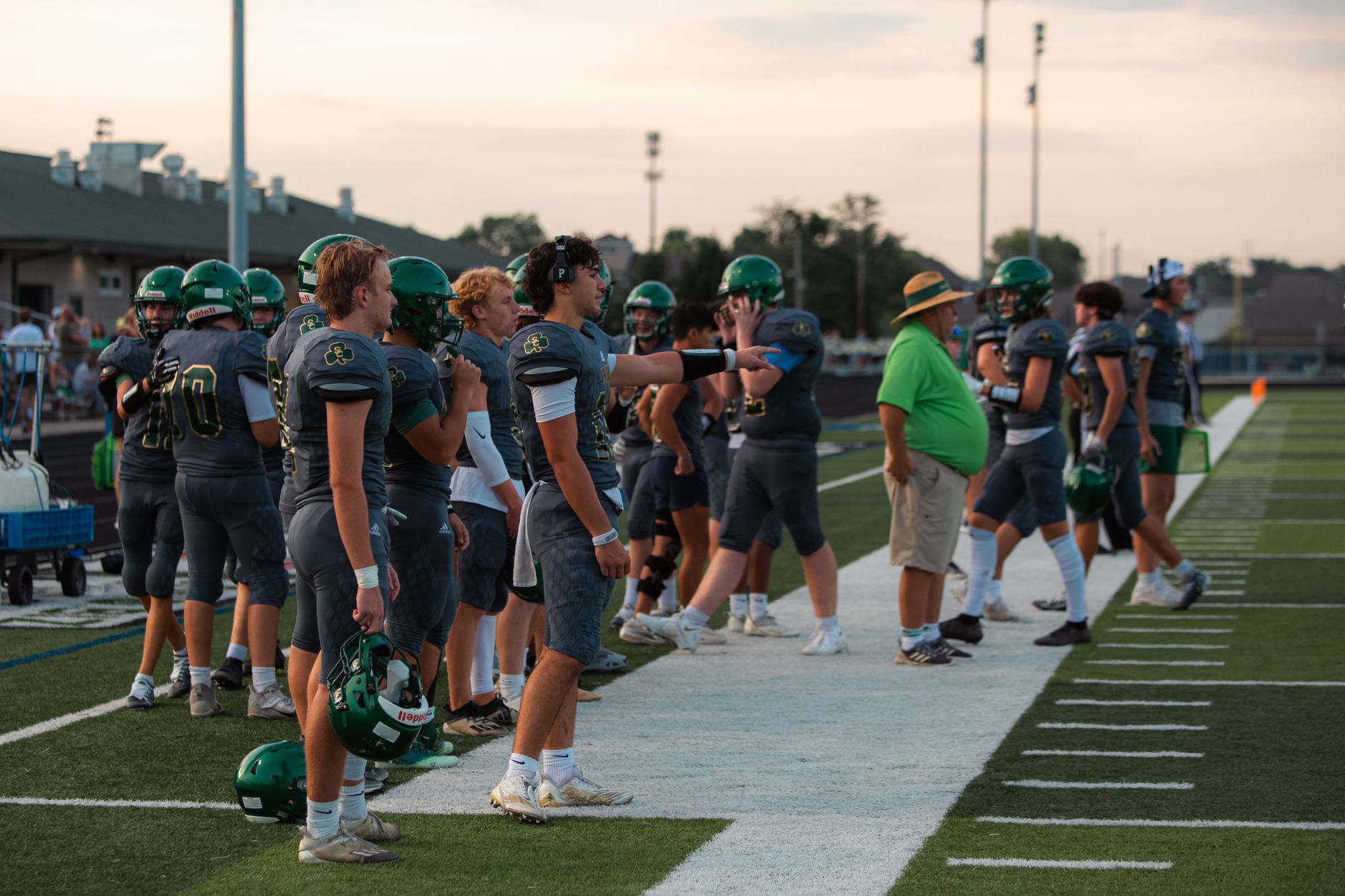
Photo by Yura Forrat on Pexels
#5: Why do replay and officiating procedures matter?
Replay and officiating procedures matter because rule accuracy has two components: the written standard and the process used to apply it. NCAA 2026 discussions include replay, technology, and on-field operations, while NFL Rule 19-2 permits league personnel to consult on-field officials when considering potential disqualification for flagrant football or non-football acts, even when the conduct was not called during the play.
That NFL provision expands the importance of post-play review and administrative communication. It does not mean every hard hit automatically becomes a disqualification. The relevant question is whether the act meets the applicable standard and whether the review process has enough evidence to support removal. Teams should therefore preserve video angles, bench reports, and player explanations rather than relying on a single broadcast frame.
The information-gain point here is practical: review preparation should begin before a disputed play. A club that maintains synchronized sideline video, timestamps communication, and records substitution personnel can challenge an interpretation more effectively than a club that merely shouts at officials. Technology does not eliminate judgment; it improves the evidence available for judgment.
The NFL Operations rulebook remains the correct reference for professional football, while NCAA and NFHS programs must use their own governing documents. Never assume that a replay practice, consultation process, or disqualification standard transfers across levels. The uniforms may look familiar; the legal authority is not.
See how official wording translates into practical preparation for coaches, players, and analysts.
How were the 2026 football rules changes ranked?
The changes were ranked using expected game impact, player-safety significance, tactical novelty, frequency of likely use, and implementation risk. NCAA targeting and fair-catch provisions ranked first because they can affect scoring, possession, and player availability; NFL kickoff and onside-kick amendments followed because their strategic value depends heavily on game state.
A transparent weighting model is more useful than pretending the ranking is objective fact:
- Tactical impact: 30% — Does the change alter play selection or game strategy?
- Player safety: 25% — Does it change contact standards or player availability?
- Frequency: 20% — How often will teams encounter the situation?
- Field-position or scoring effect: 15% — Can it change expected points?
- Implementation complexity: 10% — Will equipment, replay, or communication create errors?
The weights explain why a rare fair-catch kick can outrank a frequent administrative clarification. Frequency alone is not enough; expected value equals probability multiplied by consequence. A one-in-twenty event with a large scoring or possession swing may deserve more preparation than a routine event with a tiny effect.
However, readers should adjust the weights for their purpose. A high school athletic director may rank NFHS equipment rules first because compliance risk is immediate. An NFL special-teams coordinator may rank onside-kick and kickoff alignment rules above NCAA changes because those are the only rules directly governing the team’s work. Context is not a loophole in analysis; it is the analysis.
Which 2026 football rules changes should you prioritize?
Prioritize the rulebook that governs your competition, then convert each relevant amendment into a checklist, practice scenario, and tracking metric. NCAA teams should focus on targeting, fair-catch kicks, replay, and player safety; NFL teams should focus on kickoffs, touchbacks, onside kicks, and disqualification procedures; NFHS teams should focus on equipment, head contact, helping the runner, and sideline management.
A useful preparation sequence is:
- Download the official 2026 rulebook or rules-change memorandum.
- Mark every new, deleted, or clarified provision.
- Separate effective-2026 rules from 2027 reminders.
- Build two or three practice scenarios for each tactical change.
- Ask officials to explain mechanics, not merely outcomes.
- Track preseason incidents and update the teaching plan.
- Review predictions and tactical models after real game data arrives.
For analysts and fans, the most valuable adjustment is to label every discussion by jurisdiction. Write “NCAA targeting procedure” or “NFL Rule 6-1-6,” not merely “the new football rule.” That single habit prevents category errors and makes statistical comparisons more reliable.
Goal Moments can use these distinctions when evaluating match conditions, team tactics, player discipline, and tournament narratives. The strongest prediction is not the loudest one; it is the one built on the correct competition rules, current personnel, and measurable game-state assumptions.
Photo by Jay Brand on Pexels
Frequently Asked Questions
Q: What are the football rules changes for 2026?
The 2026 football rules changes differ between NFHS, NCAA, and NFL competitions. NCAA updates include fair-catch-kick provisions, targeting and safety emphasis, replay, technology, and game-operation changes. NFL updates include onside-kick declaration flexibility, kickoff alignment amendments, a 50-yard-line touchback adjustment, and expanded consultation about possible disqualifications. NFHS changes include play-card locations, mouthguard-attachment clarifications, and a ban on slapping an opponent’s head.
Q: What is the NCAA fair-catch kick in 2026?
The NCAA fair-catch kick is a scoring opportunity that can follow a qualifying fair catch under the applicable college-football rules. It is not available after every catch and should be evaluated according to the kick type, field position, timing, and NCAA conditions. Coaches should rehearse clock-management and field-goal-unit procedures because the value is highest when a half is ending and a direct scoring attempt may outperform a conventional offensive play.
Q: Can an NFL team attempt an onside kick at any time in 2026?
Yes, the NFL 2026 Rulebook permits the kicking team to declare an onside kick at any point during the game. The declaration does not guarantee possession, and the receiving team can prepare for the unusual restart. Coaches should compare recovery probability, expected field position, score margin, time remaining, and timeout availability before using the option.
Q: What equipment changes does NFHS introduce for 2026?
NFHS 2026 permits play cards to be worn on both the forearm or wrist and belt areas, while clarifying restrictions on attachments to tooth and mouth protectors. Arm-sleeve specifications are identified for the 2027 season, so that future requirement should not be applied prematurely to 2026 games. Schools should conduct an equipment audit before competition and confirm uncertain items with their state association or officials.
Q: What is the difference between NFHS, NCAA, and NFL rule changes?
NFHS rules govern American high school football, NCAA rules govern college football, and NFL rules govern professional football. Their kickoff, targeting, replay, equipment, penalty, and officiating procedures can differ even when the terminology sounds similar. Always identify the competition level before applying a rule, because a valid NFL interpretation may be irrelevant or incorrect in an NFHS game.
Q: How should coaches prepare for the 2026 football rules changes?
Coaches should download the governing body’s official rulebook, separate current rules from 2027 reminders, and convert each relevant amendment into scenario-based practice. NCAA teams should rehearse fair-catch-kick and targeting responses, NFL teams should test kickoff and onside-kick communication, and NFHS teams should inspect equipment and teach head-contact restrictions. Tracking preseason questions from officials is often more useful than relying on short online summaries.
Q: Where can fans verify the official 2026 football rules?
Fans can verify NFL changes through NFL Football Operations, NCAA developments through NCAA and College Football Officiating materials, and high school updates through NFHS Football Rules. These primary sources are more reliable than unsourced social-media graphics or betting commentary. Goal Moments can explain tactical consequences, but the official governing body remains the final authority for wording and enforcement.
The bottom line is simple: 2026 is not one rule-change season but three overlapping rule environments. The NCAA package may reshape targeting, fair-catch decisions, replay, and safety; the NFL package may alter kickoff strategy and late-game recovery choices; and NFHS updates place sharper attention on equipment, conduct, and sideline operations. Treat the rulebook as data, not background decoration, and your analysis becomes less theatrical and considerably more accurate.
Ready to follow the 2026 football landscape with sharper tactical context and daily tournament coverage?
Thank you for reading. We hope you found this article thoughtful and inspiring.