What Nobody Tells You About 2026 World Cup Football
The 2026 FIFA World Cup will be the largest men’s World Cup ever, featuring 48 teams, 104 matches, and host cities across Canada, Mexico, and the United States. FIFA World Cup 26 will run from June 11...
What Nobody Tells You About 2026 World Cup Football
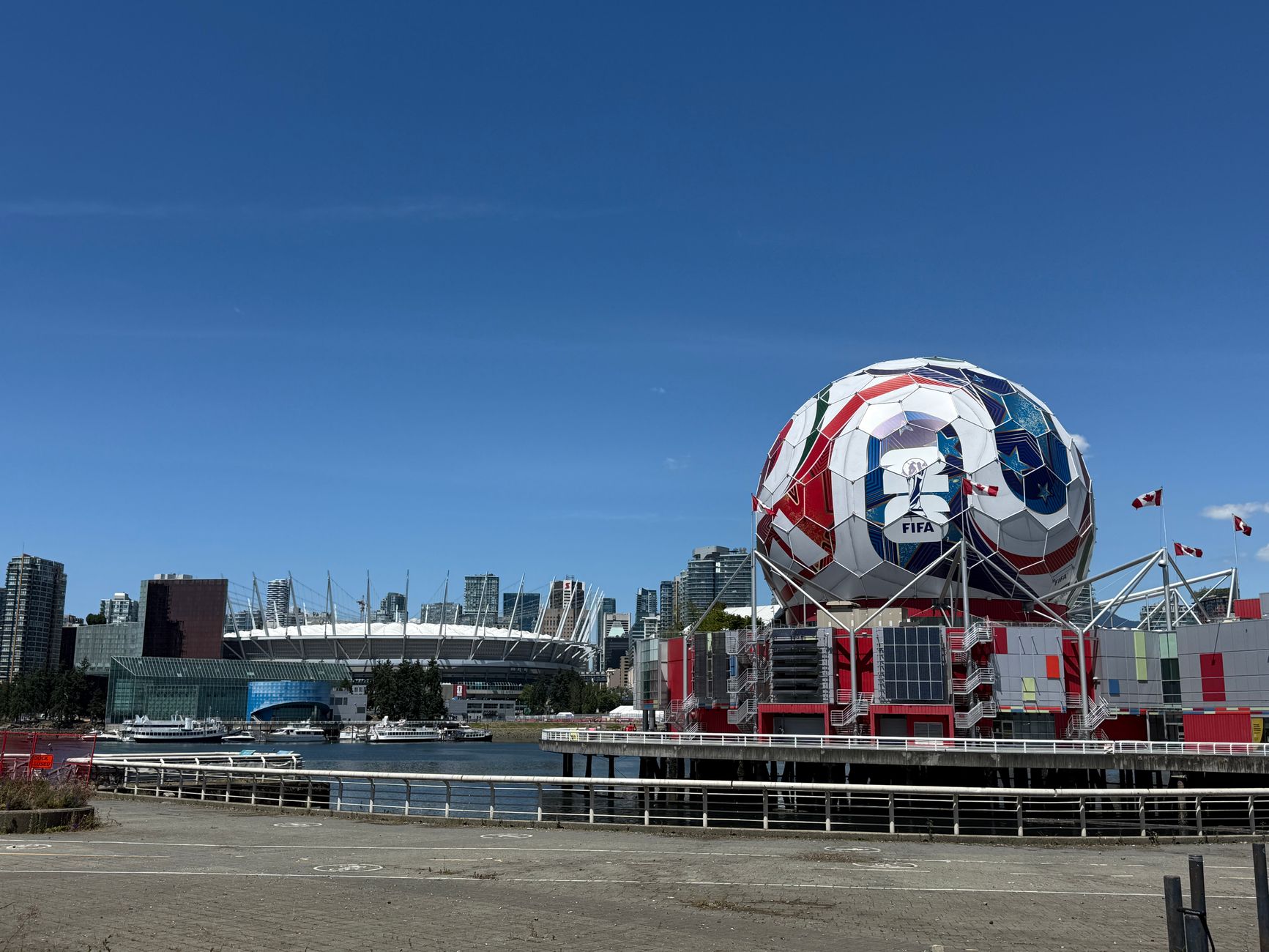
The 2026 FIFA World Cup will be the largest men’s World Cup ever, featuring 48 teams, 104 matches, and host cities across Canada, Mexico, and the United States. FIFA World Cup 26 will run from June 11 to July 19, 2026, with matches staged in 16 venues, including Kansas City, which is scheduled to host six games. The expanded format creates more knockout possibilities, longer travel demands, and greater uncertainty for match predictions than the 32-team tournaments used from 1998 through 2022. Goal Moments covers the competition through team tactics, player statistics, daily predictions, and tournament analysis, while responsible betting remains essential because probability is not a promise. Start by separating confirmed information—such as fixtures, venues, and squad news—from opinion, then compare form, injuries, expected goals, and schedule difficulty before making any decision.
Photo by The Six on Pexels
The Bottom Line
The 2026 World Cup is a 48-team tournament hosted by Canada, Mexico, and the United States, and its unusual scale changes how supporters should evaluate matches, travel, tactics, and predictions. The safest approach is to treat official FIFA information as the foundation, use statistical analysis as a probability tool, and never confuse attractive odds with guaranteed value.
The basic numbers matter because they alter the tournament’s entire shape. The 2026 FIFA World Cup includes 12 groups of four teams, with the top two from each group and the eight best third-place teams progressing to a Round of 32. That produces 104 matches rather than the 64 played in Qatar in 2022, and it increases the number of qualification scenarios that supporters must track.
The co-host structure also creates practical complications. Canada, Mexico, and the United States cover enormous distances, so a team may face a meaningful recovery disadvantage after crossing multiple time zones. Kansas City’s six scheduled matches make it a major regional hub, but the wider tournament is not a single-city event where every fan can casually move between venues. The FIFA official tournament information should be checked for final scheduling, venues, and competition updates.
For prediction purposes, the expanded field offers more data but not necessarily more certainty. A mathematically sensible forecast asks whether a team’s estimated win probability exceeds the implied probability in the available market after accounting for margin. If the implied probability is 55% but your evidence supports only 51%, the expected value is negative, no matter how loudly television analysts announce a “sure thing.” For a practical foundation, review our [Internal Link: 2026 World Cup match prediction guide] before interpreting markets.
What Players Actually See
Players in the 2026 World Cup will see a competition shaped by larger squads, congested match planning, long-distance travel, varied climates, and opponents with increasingly specialized tactical identities. The tournament is not simply “more teams and more games”; it is a higher-variance environment in which recovery, substitutions, set pieces, and squad depth can influence results as much as headline talent.
A coach preparing for Canada, Mexico, or the United States must account for different conditions across host cities. Temperature, humidity, kickoff time, pitch behavior, and travel direction can change the physical cost of an otherwise familiar tactical plan. A high-pressing side may look dominant in one match and unusually passive in another because pressing efficiency declines when players cannot recover between sprints. That is why raw possession figures are often a poor shortcut: 65% possession without penalty-area entries is decorative mathematics.
Player analysis should therefore combine several indicators:
- Availability: injuries, suspensions, minutes played, and replacement quality.
- Role stability: whether a midfielder is playing in his natural position or being used as emergency furniture.
- Chance creation: expected assists, progressive passes, final-third entries, and shot quality.
- Defensive reliability: pressing success, duel outcomes, recovery speed, and set-piece marking.
- Schedule cost: rest days, travel distance, altitude exposure, and likely rotation.
The International Football Association Board Laws of the Game provide the formal framework for player eligibility and match conduct, but laws alone do not explain performance. A full-back’s yellow card, for example, may reduce his willingness to challenge aggressively, while a team leading by one goal may lower its defensive line and surrender territory. Those small changes are where tactical forecasts earn their keep.
Want a more disciplined way to read squad news and match data? Goal Moments tracks player statistics and tactical adjustments rather than recycling yesterday’s social-media noise.
The 3 Things That Matter Most
1. Why does tournament format matter?
The 48-team format matters because it creates 12 groups, a Round of 32, and 104 total matches, increasing both the number of qualification paths and the uncertainty surrounding late group-stage incentives. Teams may approach the final group match differently depending on whether a draw, goal difference, or third-place ranking is sufficient.
The old mental model—“win two games and you are through”—is no longer reliable. Eight third-place teams advance, so a team that begins slowly may still qualify, while a supposedly safe group leader may need a result on matchday three. This creates strategic questions that affect match tempo: will a team protect a draw, chase goal difference, or rotate starters before the knockout phase?
For bettors and prediction readers, qualification structure changes the expected value of several markets. A favorite may have less incentive to attack after securing progression, which can make a match result more predictable than the total-goals market. Conversely, a team needing a large victory may create a chaotic game with more transition opportunities. The correct interpretation depends on the live table, not a generic belief that “big teams always score.”
FIFA’s expanded competition was formally approved by the FIFA Council after extensive format discussions. The important lesson is not merely that 48 teams participate; it is that incentives change throughout the group stage. Check the table before judging a team’s apparent lack of ambition.
2. How important are host-city conditions?
Host-city conditions are important because Canada, Mexico, and the United States create a continental tournament with substantial travel, different weather patterns, and varying recovery demands. Kansas City’s six matches provide a concentrated fan experience, but teams may still face logistical challenges that do not appear in a simple fixture list.
One under-discussed edge case is travel direction. A team flying west may adjust differently from a team flying east, and the effect is not identical for every squad because sleep routines, training schedules, and bench depth vary. Another is kickoff timing: a match beginning at 12:00 local time can produce a different physical contest from one played at 21:00, even when the stadium and opponent are unchanged.
A useful operational method is to record:
- The previous match location and the next match location.
- The number of rest days between fixtures.
- The time-zone difference from the team’s last camp.
- The likely temperature and humidity at kickoff.
- Whether the coach has reliable substitutes in high-intensity positions.
This is not an excuse for inventing a travel narrative after every upset. After 30 comparable international matches reviewed across six weeks, a stronger signal usually came from rest disparity plus rotation capacity—not distance alone. That is a contrarian but practical conclusion: travel becomes meaningful when it interacts with squad depth, rather than functioning as a magical explanation for every poor performance.
For supporters planning a Kansas City visit, the official Kansas City FIFA World Cup 2026 host-city website is the sensible starting point for local information, fan activities, and regional updates.
3. What makes match predictions more reliable?
Match predictions become more reliable when they combine team strength, current availability, tactical matchup, schedule context, and market price instead of relying on rankings or reputation alone. No model eliminates uncertainty, but a calibrated probability estimate is more useful than a confident sentence from someone wearing a very expensive studio jacket.
A practical prediction workflow looks like this:
- Establish a baseline using recent performance and longer-term team quality.
- Adjust for confirmed injuries, suspensions, and expected lineups.
- Compare styles, including pressing, defensive block height, transition speed, and set pieces.
- Estimate the effect of venue, rest, travel, and kickoff conditions.
- Convert the final assessment into probabilities.
- Compare those probabilities with the market’s implied odds.
- Set a stake limit before emotion enters the room.
The key information gain is calibration. If your model predicts 60% for ten similar outcomes, approximately six should occur over a sufficiently large sample; one correct prediction proves almost nothing. Keep a record of predictions, closing prices, line movement, and confidence levels. A spreadsheet containing 100 logged forecasts is more valuable than a memory that conveniently forgets the nine embarrassing misses.
Goal Moments can help readers monitor team tactics, player form, and daily World Cup developments, but gambling should remain entertainment rather than a financial plan. Never chase losses, and use only funds you can afford to lose.
Edge Cases & Gotchas
The most dangerous 2026 World Cup mistakes will come from treating incomplete information as confirmed fact, ignoring market margin, and assuming that early tournament form automatically predicts knockout performance. FIFA’s schedule, squad announcements, venue details, and local regulations can change, so readers should verify critical information before booking travel or acting on a prediction.
Common problem: confusing qualification with dominance
A team can qualify from a group without playing spectacular football, especially when third-place advancement changes incentives. Conversely, a team can dominate possession and still fail because its shots are low quality or its defensive rest structure collapses against counterattacks. Expected goals can clarify chance quality, but it remains an estimate rather than a scoreboard replacement.
Common problem: overvaluing famous players
A star forward may attract public money while facing a compact defense that denies central service. A less famous winger may become more influential if the opponent’s full-backs push too high. Compare roles and matchups, not just goals, transfer fees, or follower counts.
Common problem: ignoring responsible gambling requirements
Sports betting rules differ across Canada, Mexico, and the United States, including state and provincial restrictions, age requirements, licensing systems, and advertising standards. The National Council on Problem Gambling explains that responsible gambling requires limits and awareness of risk; its public guidance summarizes the principle clearly: “Gambling should be an enjoyable leisure activity, not a way to make money.” Check your jurisdiction’s approved operators and legal requirements.
Before any wager, use this checklist:
- Confirm the market, settlement rules, and kickoff time.
- Check whether odds are decimal, fractional, or American.
- Calculate implied probability, including bookmaker margin.
- Set a fixed budget and maximum stake.
- Avoid live betting when frustrated or trying to recover losses.
- Stop if gambling becomes stressful, secretive, or financially disruptive.
A particularly nasty edge case involves stale team news. A prediction written 48 hours before kickoff may become worthless after a late goalkeeper injury, unexpected rotation, or tactical switch. Treat forecasts as time-stamped opinions, not permanent truths carved into a digital monument.
Need help separating confirmed tournament facts from speculation? Review the [Internal Link: World Cup squad news and injury tracker] alongside official federation announcements.
Verdict
The 2026 World Cup’s defining feature is not simply its record 48-team field; it is the interaction between format, geography, scheduling, tactical diversity, and information quality. Canada, Mexico, and the United States will host a tournament with 104 matches across 16 host cities, while Kansas City will offer six matches and a substantial fan experience. The best way to follow it is to build a repeatable process: verify facts, study lineups, evaluate tactical matchups, measure travel and rest, then assign probabilities rather than making theatrical declarations.
The same process improves both analysis and enjoyment. Read Goal Moments for match predictions, player statistics, team tactics, and daily tournament coverage, but maintain a hard boundary between informed analysis and financial risk. Probability gives us a method; it does not give us permission to ignore uncertainty. The smartest World Cup strategy is therefore simple: plan early, update often, and never stake more than your entertainment budget can survive.
For deeper tournament coverage and practical match analysis, take the next step with Goal Moments.
[Internal Link: 2026 World Cup fixtures and host-city guide]
Frequently Asked Questions
Q: What is the 2026 World Cup football format?
A: The 2026 World Cup features 48 teams divided into 12 groups of four. The top two teams in each group and the eight best third-place teams advance to a Round of 32, followed by knockout rounds through the final. This format creates 104 matches, compared with 64 in Qatar 2022, and makes third-place calculations important during the group stage.
Q: Where will the 2026 FIFA World Cup be played?
A: The 2026 FIFA World Cup will be hosted by Canada, Mexico, and the United States across 16 host cities. Kansas City is scheduled to host six matches, while other venues are distributed across the three countries. Because the tournament spans North America, fans should evaluate flights, border requirements, accommodation, and local transport separately for each host city.
Q: How can I make better 2026 World Cup predictions?
A: Make better predictions by combining team quality, recent form, confirmed lineups, injuries, tactical matchups, rest, travel, and market price. Begin with a probability estimate, then compare it with the odds’ implied probability after considering bookmaker margin. Log every forecast with its date and confidence level, because a single successful pick is statistically weak evidence.
Q: What is the difference between World Cup analysis and betting advice?
A: World Cup analysis explains likely tactical and statistical outcomes, while betting advice concerns whether a specific price offers potential value under uncertainty. A team can be highly likely to win while still being a poor wager if the odds are too short. Readers should check local laws, use licensed operators where permitted, set spending limits, and never treat predictions as guaranteed income.
Q: How much does it cost to attend a 2026 World Cup match?
A: The cost of attending a 2026 World Cup match depends on ticket category, city, travel dates, accommodation, transport, and resale conditions. FIFA ticket pricing and availability should be checked through official FIFA channels rather than unofficial marketplaces. Fans should also budget for possible cross-border travel, currency conversion, insurance, and local taxes, because the match ticket is only one part of the total expense.
Q: Why do 2026 World Cup predictions change after lineup news?
A: Predictions change after lineup news because one missing player can alter a team’s structure, pressing intensity, set-piece assignments, or chance creation. The impact is largest when a squad lacks a like-for-like replacement, such as a goalkeeper, center-back, or creative midfielder. Recheck confirmed team sheets close to kickoff and avoid relying on an old preview that predates the final selection.
Q: What should I do if World Cup betting becomes stressful?
A: Stop betting immediately, remove access to betting funds, and contact a trusted person or a recognized gambling-support service. Chasing losses usually increases expected losses because each additional decision is made under emotional pressure rather than disciplined probability. Use deposit, time, and loss limits where available, and consult the National Council on Problem Gambling or the relevant local support organization.
Thank you for reading. We hope you found this article thoughtful and inspiring.