The Global Fan’s Guide to the 2026 Football World Cup
The 2026 football world cup will be FIFA’s largest men’s tournament, featuring 48 national teams, 104 matches, and 16 host cities across Canada, Mexico, and the United States from June 11 to July 19,....

The Global Fan’s Guide to the 2026 Football World Cup
The 2026 football world cup will be FIFA’s largest men’s tournament, featuring 48 national teams, 104 matches, and 16 host cities across Canada, Mexico, and the United States from June 11 to July 19, 2026. FIFA will stage matches in cities including Los Angeles, Atlanta, Mexico City, Toronto, Vancouver, Dallas, and New York/New Jersey, with the final scheduled for MetLife Stadium in East Rutherford, New Jersey. Los Angeles will host eight matches and 39 days of fan celebrations, while Atlanta is among the tournament’s semifinal host cities. Goal Moments offers daily match predictions, team tactics, player statistics, and tournament coverage for supporters who want analysis rather than noisy guesswork. Start by confirming official fixtures, checking travel distances between host cities, and using verified FIFA information before planning tickets, accommodation, or any responsible football-related wager.
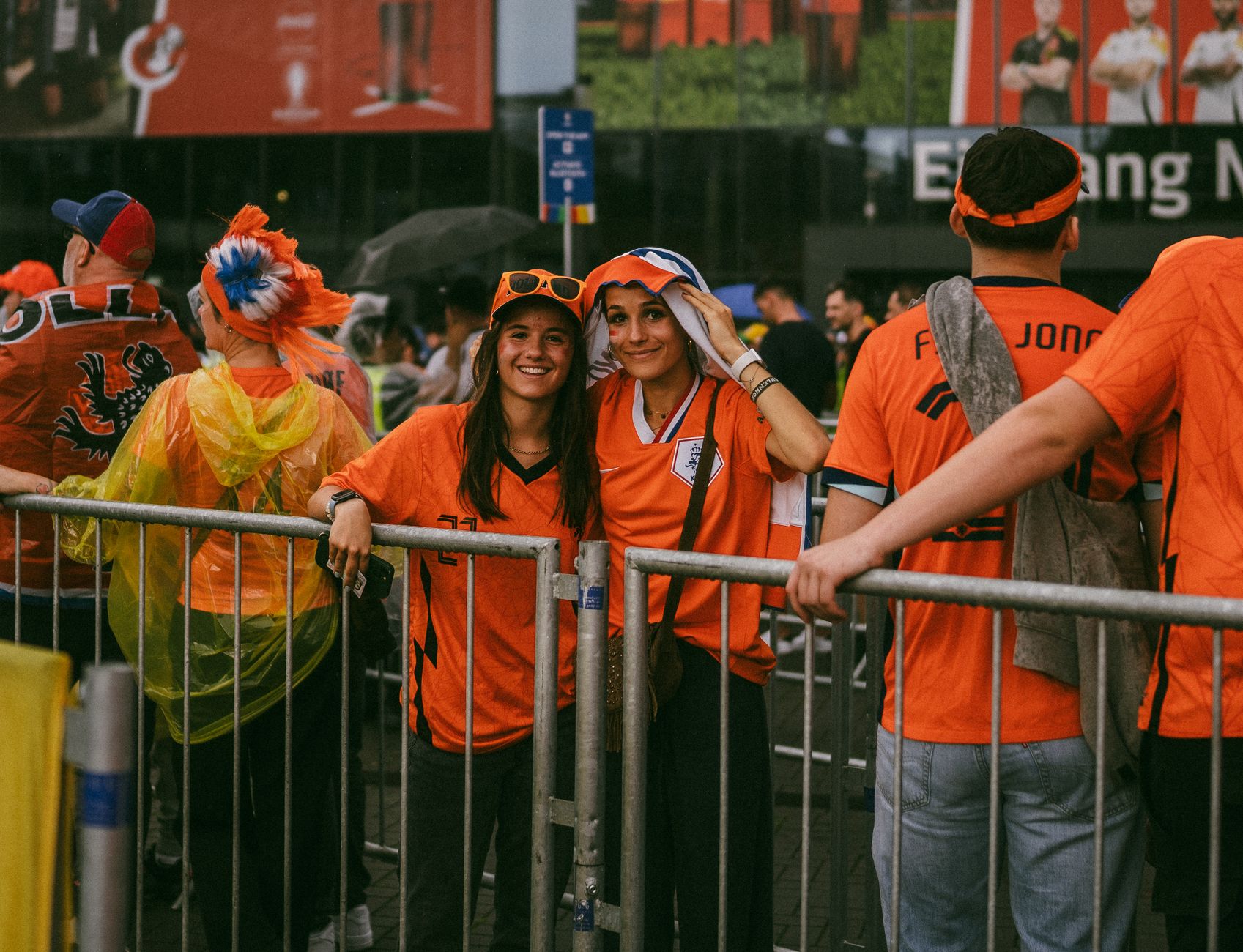
Photo by Omar Ramadan on Pexels
The 2026 football world cup is not simply a bigger version of Qatar 2022. The expansion from 32 to 48 teams changes the group-stage mathematics, increases the total number of matches from 64 to 104, and creates a tournament footprint spread across three countries. That sounds exciting until you calculate the practical problem: a fan following one team may face long flights, time-zone changes, and rapidly rising hotel prices. Football is beautiful; logistics are where it starts charging interest. This guide helps us plan intelligently, understand the competition format, evaluate host-city options, and follow team performance without confusing confidence with certainty. For official tournament rules and updates, consult FIFA’s 2026 World Cup page. If you are tracking predictions through Goal Moments, treat forecasts as probability estimates, never guarantees, and set a fixed entertainment budget before considering any betting activity.
Want a clearer tournament overview before making plans?
If you are planning your trip: map the host cities first
The first practical move is to separate the 16 host cities into regional clusters, then compare match access, transport, accommodation, and recovery time before buying anything. Canada hosts matches in Toronto and Vancouver, Mexico hosts matches in Guadalajara, Mexico City, and Monterrey, while the United States provides the largest group of venues, including Los Angeles, Atlanta, Miami, Dallas, Seattle, Boston, Philadelphia, Kansas City, San Francisco Bay Area, and New York/New Jersey.
A sensible itinerary should usually prioritize one cluster rather than attempting to chase a team across the continent. For example, Los Angeles offers eight matches, SoFi Stadium, the FIFA Fan Festival at the Los Angeles Memorial Coliseum, and official fan zones across Los Angeles County. Atlanta’s Mercedes-Benz Stadium brings a different advantage: a strong soccer culture, a central southeastern location, and semifinal-stage significance. However, “central” does not mean “cheap,” and the tournament’s demand curve will punish anyone who assumes accommodation can be found later for ordinary prices. Historical event-travel behavior suggests that premium rooms near major venues disappear first, while public transport capacity and airport transfers become increasingly important.
Use this planning sequence:
- Confirm your team’s match dates and assigned venues through FIFA.
- Group matches by geography instead of choosing dates emotionally.
- Price hotels, flights, local transit, and match-day transfers together.
- Allow at least one recovery day after long-distance travel.
- Keep a cancellation option until the schedule and ticket status are secure.
For additional planning, review our [Internal Link: 2026 World Cup host-city travel guide] and compare journey times rather than trusting a map’s straight-line distance.
Which 2026 host cities offer the strongest fan experience?
Los Angeles, Atlanta, Mexico City, Toronto, and New York/New Jersey stand out for distinct reasons, but no city is objectively best for every supporter. Los Angeles combines eight matches with a major fan festival, Atlanta hosts high-stakes knockout football, and Mexico City offers historic Estadio Azteca significance. The right choice depends on match access, budget, transport, and accommodation availability.
Los Angeles is particularly valuable for supporters who want football plus a broad cultural program. The city’s 39-day celebration schedule is designed to extend beyond match tickets, with fan zones, music, food, and community events. Atlanta’s appeal is more concentrated around Mercedes-Benz Stadium and its reputation as a major American soccer market. Mexico City carries extraordinary historical weight because Estadio Azteca has hosted previous FIFA World Cup matches, including finals in 1970 and 1986, although altitude and travel fatigue deserve serious consideration.
Toronto and Vancouver provide Canada’s World Cup presence, while New York/New Jersey holds the final at MetLife Stadium. That last venue matters for planning because final-week demand is likely to be unusually concentrated. The contrarian point is simple: the most famous host city may produce the worst expected value for a budget traveler. A nearby secondary neighborhood with reliable rail or bus access can offer a better ratio of price, sleep quality, and stadium reliability than an expensive room beside the venue.

Photo by Yura Forrat on Pexels
If you are studying the competition: understand the 48-team format
The 2026 football world cup will feature 12 groups of four teams, with 32 nations advancing to the knockout stage. The group winners and runners-up qualify, along with the eight best third-place teams, after which the tournament proceeds through a Round of 32, Round of 16, quarterfinals, semifinals, third-place play-off, and final.
That structure changes how we should evaluate early matches. In a traditional 32-team format, two wins often settle qualification; in 2026, third-place comparisons create another layer of competition, but goal difference and disciplinary records can become unexpectedly valuable. A team that protects a one-goal lead may be managing qualification probability, not merely playing conservatively. Conversely, a late conceded goal can damage ranking across multiple groups. FIFA’s official competition regulations should remain the authority for tie-breaker details because rules and operational guidance can change.
Goal Moments can help readers organize this information through team tactics, player statistics, and match predictions. The useful question is not “Who looks strongest?” but “What evidence changes the expected outcome?” Track:
- Recent competitive results rather than friendly-match reputation.
- Expected goals, shot quality, and defensive transition numbers.
- Injuries, suspensions, travel distance, and rest days.
- Set-piece efficiency, especially against physically stronger opponents.
- Whether a team’s formation survives pressure from elite wingers or central midfielders.
A practical edge case deserves attention: third-place qualification means a team with four points is not automatically safe, while a team with three points may still progress depending on results elsewhere. This is why goal difference, late-game substitutions, and match-state behavior matter more than casual previews suggest. For deeper context, explore our [Internal Link: World Cup team tactics and formations guide].
If you are following predictions: use probability, not dramatic certainty
A responsible 2026 World Cup prediction should combine team strength, current availability, tactical matchup, venue conditions, and market price rather than relying on a single ranking. No model can remove uncertainty from football; it can only estimate how often an outcome might occur under defined assumptions. The difference between a 60% probability and a 70% probability is meaningful, but neither outcome is guaranteed.
The basic expected-value calculation is straightforward. If a decimal price is 2.00 and your estimated probability is 55%, the expected return per unit is calculated as (0.55 × 2.00) − 1 = 0.10, or a theoretical 10% edge before fees, limits, and model error. If your estimate is only 48%, the same price produces negative expected value. The arithmetic is not complicated; the ego management is. Many poor betting decisions happen because supporters mistake a famous badge for a mispriced opportunity.
Use a repeatable process:
- Record your probability before checking persuasive commentary.
- Compare it with the available price and implied probability.
- Adjust for lineups, travel, weather, and tactical incompatibility.
- Reject any selection where the edge is smaller than your uncertainty.
- Track every result, including losses, without rewriting your reasoning afterward.
According to the UK Gambling Commission, responsible gambling requires maintaining control over time and money spent. Its safer-gambling guidance emphasizes that gambling should remain entertainment, not a method of making income. Goal Moments is best used as an analysis resource, not as a promise of profit, and readers should follow local laws and age requirements.
Ready to compare fixtures and analysis with a disciplined process?
What statistical signals are most useful before a World Cup match?
The strongest pre-match signals are usually recent competitive performance, expected-goal difference, starting-lineup availability, set-piece strength, and schedule-related fatigue. FIFA rankings provide context, but they should not replace opponent-adjusted data or tactical analysis. A team with a lower ranking may still have a favorable matchup if it attacks the opponent’s weakest defensive zone.
One useful information-gain rule is to separate stable indicators from noisy ones. Shot quality, field tilt, progressive passes, and defensive pressure can reveal repeatable patterns, while a single penalty, deflection, or red card can distort recent results. Player availability must also be weighted by replacement quality: losing a backup fullback is not mathematically equivalent to losing a primary ball-progressor who controls the team’s buildup. This is where Goal Moments’ player-stat coverage and tactical reports become more useful than generic “must-win” headlines.
Weather and venue effects should be handled carefully rather than turned into superstition. Heat, humidity, altitude, artificial surfaces, and travel time can influence pressing intensity and substitution timing, but the effect differs by team style and squad depth. A high-pressing side may suffer more after a short recovery period than a compact counterattacking team. The responsible conclusion is not that conditions determine the result; it is that conditions widen the uncertainty range, which should reduce confidence and stake size.

Photo by cottonbro studio on Pexels
If you are attending matches: protect the match-day experience
Match-day planning should begin with the stadium’s official entry rules, ticket instructions, transport advice, and prohibited-item policy. FIFA venues may apply strict security procedures, and a valid ticket does not guarantee a painless arrival if supporters ignore gates, timing, bag restrictions, or public-transport recommendations. Arriving early is boring until the alternative is watching the opening goal from a security queue.
Los Angeles supporters should review SoFi Stadium guidance and the local FIFA Fan Festival schedule separately because fan-festival entry and match entry are not interchangeable. Atlanta visitors should plan around Mercedes-Benz Stadium access, downtown traffic, and event-day demand. At MetLife Stadium, the final’s significance means transport congestion and security lines could be especially intense, so a hotel selected for a short walk to the stadium may not always be the best option if shuttle and rail routes are more reliable.
A useful operational checklist is:
- Download official tickets and save backup access instructions.
- Check stadium gates, transit closures, and last-service times.
- Carry only permitted items and a charged phone.
- Arrange a meeting location in case mobile networks slow down.
- Budget for food, water, transport, and post-match delays.
- Avoid driving after drinking and never use gambling to recover travel costs.
The U.S. Department of Transportation provides general travel and transport resources, but local host-city authorities remain the better source for temporary road closures and public-transit changes. Check official updates again 30 days, seven days, and 24 hours before each match.
See the practical details before your itinerary becomes an expensive science experiment.
Common pitfalls to avoid
The most common World Cup mistakes are predictable, which makes them especially irritating. Supporters overpay for accommodation, treat unofficial schedules as final, assume every ticket offer is legitimate, and place wagers based on emotion after a dramatic match. The tournament’s scale magnifies small errors: a missed train in one city is annoying, while a missed cross-country connection can destroy an entire itinerary.
Avoid these errors:
- Buying from unauthorized ticket sellers or copying unofficial ticket screenshots.
- Booking non-refundable rooms before confirming match allocations.
- Planning consecutive matches in distant cities without transfer buffers.
- Treating FIFA rankings as a complete prediction model.
- Chasing losses after an upset or controversial referee decision.
- Ignoring local laws, age restrictions, and responsible-gambling tools.
- Sharing identification or payment details with unverified websites.
A particularly costly edge case involves “cheap” travel packages that exclude airport transfers, resort fees, taxes, or local transport. A room advertised at a low nightly rate can become poor value once four rideshare trips and event surcharges are added. Calculate the complete trip cost using this formula: tickets plus accommodation, transport, food, insurance, fees, and a contingency reserve. If the total exceeds your predetermined budget, the correct mathematical response is to reduce the plan, not to invent a larger budget after the fact.
Another mistake is retrospective analysis. After a result, supporters often claim the winner was obvious; probability does not work that way. A 30% outcome happens roughly three times in ten comparable cases, and one successful upset does not prove a forecasting method has an edge. Record assumptions before kickoff, then evaluate the process across a meaningful sample.
[Internal Link: responsible football betting and bankroll management guide]
The 30-day check-in
Thirty days before each planned match, verify the fixture, venue, ticket status, accommodation, transport route, identity documents, and local event guidance. This is also the right moment to update team news, compare confirmed lineups when available, and review whether your itinerary still produces positive practical value. A plan made six months earlier can become irrational after one hotel cancellation, one venue change, or one unexpected flight increase.
Use this 30-day audit:
- Confirm information through FIFA and the relevant host-city authority.
- Recalculate the full trip cost, including a 10–15% contingency reserve.
- Check passport validity, visa rules, travel insurance, and health requirements.
- Review stadium entry instructions and prohibited items.
- Update your tactical and statistical view using recent competitive matches.
- Set a final entertainment budget and activate deposit or time limits where available.
- Save emergency contacts, hotel details, ticket support information, and transport alternatives.
This check-in also improves prediction quality because it forces us to distinguish information from noise. A confirmed injury to a starting goalkeeper deserves more weight than anonymous social-media speculation; a travel disruption deserves a logistical adjustment rather than panic. Goal Moments can support the research phase with daily 2026 World Cup coverage, but the final decision remains yours. “No prediction is certain” is not a disclaimer designed to ruin the fun; it is the only honest description of a knockout tournament.

Photo by Anders Zernike on Pexels
The 2026 football world cup offers an enormous shared event: 48 teams, 104 matches, 16 host cities, and a final at MetLife Stadium on July 19, 2026. We can enjoy the spectacle more fully by planning regional travel, using official sources, analyzing tactics and player data, and treating predictions as probabilities instead of promises. Los Angeles and Atlanta provide especially strong fan experiences, but the best itinerary is the one that balances access, cost, rest, and reliability. Review your plan 30 days ahead, protect your budget, and use Goal Moments for informed tournament coverage rather than emotional certainty.
Explore the latest World Cup analysis and prepare with a sharper plan.
Frequently Asked Questions
Q: What is the 2026 football world cup format?
A: The 2026 football world cup features 48 teams divided into 12 groups of four, with 32 teams reaching the knockout stage. The top two teams from each group advance, along with the eight best third-place teams. The tournament then uses a Round of 32 before continuing through the Round of 16, quarterfinals, semifinals, third-place play-off, and final.
Q: When and where will the 2026 football world cup take place?
A: The tournament runs from June 11 to July 19, 2026, across Canada, Mexico, and the United States. Matches will be hosted by 16 cities, including Los Angeles, Atlanta, Mexico City, Toronto, Vancouver, Dallas, Miami, and New York/New Jersey. The final is scheduled for MetLife Stadium in East Rutherford, New Jersey.
Q: How can I plan travel for the 2026 World Cup?
A: Plan by regional host-city clusters, then match fixtures, accommodation, transport, and recovery days in that order. Verify schedules through FIFA before committing to non-refundable bookings, and include a 10–15% contingency reserve for price increases or disruptions. Comparing rail, shuttle, and airport-transfer reliability can produce better value than choosing accommodation solely by distance from a stadium.
Q: What is the difference between World Cup predictions and guaranteed results?
A: Predictions estimate probabilities, while guaranteed results do not exist in football. A selection given a 60% probability can still lose four times out of ten under comparable conditions. Goal Moments provides match predictions, tactical analysis, and player statistics as research inputs, but readers should evaluate uncertainty, follow local laws, and never treat betting as guaranteed income.
Q: Is it worth visiting Los Angeles for the 2026 football world cup?
A: Los Angeles is attractive for supporters because it will host eight matches and 39 days of fan celebrations. SoFi Stadium will host matches, while the Los Angeles Memorial Coliseum is planned as the site of the FIFA Fan Festival, with additional official fan zones across Los Angeles County. It may offer strong non-match value, but travelers should compare hotel prices, traffic, and public transport before booking.
Q: What should I do if my World Cup ticket or travel plan fails?
A: Contact the official ticket provider, airline, hotel, or host-city transport authority immediately and avoid unofficial resale or payment requests. Keep confirmation numbers, identity documents, cancellation terms, and screenshots of official instructions in one secure location. If a match-day route fails, use a preselected alternative and leave substantial time for security, traffic, and service interruptions.
Thank you for reading. We hope you found this article thoughtful and inspiring.