Inside FIFA World Cup: A 30-Day Forecast
The FIFA World Cup is international football’s premier tournament, organized by FIFA for national teams across the global football market, with the 2026 edition hosted by Canada, Mexico, and the Unite...

Inside FIFA World Cup: A 30-Day Forecast
The FIFA World Cup is international football’s premier tournament, organized by FIFA for national teams across the global football market, with the 2026 edition hosted by Canada, Mexico, and the United States. The competition expands to 48 teams in 2026, up from 32 in Qatar 2022, creating 104 matches across 16 host cities. Brazil remains the most successful nation with five titles, while Argentina entered 2026 as the reigning champion after defeating France in the 2022 final. Goal Moments follows the tournament through match predictions, team tactics, player statistics, and daily coverage designed for fans rather than blind guesswork. The practical takeaway is simple: assess qualification paths, squad availability, tactical matchups, and verified statistics before forming a World Cup opinion or prediction.

Photo by El gringo photo on Pexels
World Cup football is easy to describe and surprisingly difficult to read correctly. Every four years, people who normally confuse a false nine with a tax form suddenly become tactical authorities, while serious analysts discover that one deflection can destroy a beautifully calculated probability model. That is the charm and cruelty of the FIFA World Cup: a short tournament compresses elite talent, travel, pressure, weather, refereeing decisions, and random variance into a small sample of matches.
Goal Moments approaches the 2026 World Cup as a research problem. We examine expected goals, shot quality, possession value, defensive transitions, set-piece efficiency, injuries, travel distances, and opponent strength. That does not eliminate uncertainty; nothing does. It does, however, improve the expected value of your analysis by replacing emotional narratives with evidence. If you follow football predictions, use the information as entertainment and research, never as a guarantee of profit, and set a fixed budget before considering any regulated betting market.
Want a clearer starting point for your tournament research?
If you want the World Cup context: start with the tournament structure
The FIFA World Cup is a FIFA-organized men’s national-team competition that determines the world champion through qualification, group-stage, and knockout matches. The 2026 tournament includes 48 teams, 12 groups of four, and 104 matches hosted across Canada, Mexico, and the United States. This format increases representation, but it also changes probability calculations because the number of qualification scenarios, third-place permutations, and travel variables is substantially higher than in the 32-team era.
The tournament began in 1930 in Uruguay, where the host nation won the inaugural competition. FIFA suspended the event during the Second World War, so the World Cup has not been held in every four-year interval despite its famous cycle. Brazil’s five championships remain the historical benchmark, followed by Germany and Italy with four each, Argentina with three, and France and Uruguay with two apiece. For a concise historical reference, FIFA’s official World Cup archive provides tournament records, match information, and competition updates.
The 2026 structure rewards careful reading. In each four-team group, teams play three matches, and the top two nations advance alongside the eight best third-place teams. That means a team can survive without finishing first, but it also creates a nasty statistical trap: a strong opening result may not guarantee qualification, while goal difference can become decisive. The 2022 World Cup demonstrated how quickly group tables can turn during simultaneous final-round matches, and the expanded format multiplies those edge cases.
A useful 30-day preparation model divides research into four stages:
- Days 30–22: review qualification status, squad depth, coaching changes, and recent competitive fixtures.
- Days 21–15: compare tactical systems, set pieces, pressing intensity, and opponent quality.
- Days 14–7: monitor injuries, travel plans, weather, training reports, and confirmed squad selections.
- Days 6–0: reassess lineups, market movement, match locations, and late information without chasing dramatic headlines.
The official competition rules and match schedule should take priority over social-media summaries. Wikipedia’s FIFA World Cup overview is useful for historical context, but it should not replace FIFA announcements for current fixtures, disciplinary decisions, or squad regulations. In expected-value terms, authoritative information has a higher reliability coefficient than anonymous posts dressed up with three flags and an unnecessary fire metaphor.
[Internal Link: complete 2026 World Cup tournament guide]
If you want to compare teams: do the tactical probability work
Team strength in World Cup football is best assessed through multiple indicators, not one ranking or one famous player. Compare attacking output, defensive concession, opponent quality, possession progression, transition control, and set-piece performance across a meaningful sample. FIFA ranking position can provide context, but it is not a match prediction by itself because the ranking system, schedule strength, and current squad condition can produce different conclusions.
A practical answer begins with a weighted model. For example, you might assign 30% to recent competitive performance, 25% to player availability, 20% to tactical matchup, 15% to defensive and set-piece data, and 10% to location and travel. Those weights are not sacred mathematics carved into the trophy; they are a disciplined way to prevent one emotional factor from taking over. If a key striker is injured, reducing the team’s attacking conversion estimate by a fixed amount is more rational than announcing that the entire nation has forgotten how to play football.
Start with these measurable questions:
- Does the team create high-quality chances or merely collect possession?
- How often does it lose the ball in central areas during buildup?
- Can its full-backs recover against fast counterattacks?
- Does its midfield resist pressure from elite opponents?
- Does it defend corners and indirect free kicks consistently?
- Has its recent record been built against strong or weak opposition?
Expected goals, commonly written as xG, estimate the probability that a shot becomes a goal based on factors such as location, angle, assist type, and defensive pressure. xG is valuable, but it is not a crystal ball with a subscription fee. A team producing 2.0 xG in a match has not scored two goals; it has generated chances with an estimated scoring probability. Variance remains enormous in a three-match group stage, especially when a goalkeeper produces an exceptional performance or a deflected shot changes the entire game state.
A practitioner-level insight is to separate “team quality” from “match suitability.” Spain may dominate a possession battle against a deep defensive block, yet struggle if its rest-defense structure leaves space for direct counters. Argentina may benefit from compact midfield spacing and transition control against one opponent, then face a different problem against a side that overloads wide zones. France, Germany, Brazil, England, Portugal, and the Netherlands should therefore be evaluated by matchup rather than brand reputation. Famous shirts are not a tactical system.
At Goal Moments, player analysis also considers role stability. A midfielder who plays as a deep distributor for Manchester City may be used as a higher-risk box-to-box player by his national coach, changing his expected touches, progressive passes, and defensive workload. Likewise, a winger’s club statistics may overstate his World Cup role if the national team asks him to hold width instead of attacking the half-space. This is where many casual predictions fall apart: they import club numbers without checking the player’s actual function.
Ready to compare tactical profiles rather than simply picking the famous badge?
If you want to assess a match: do A before B
Before evaluating a World Cup match, establish the baseline probability from team strength, then adjust for lineups, tactical interaction, venue, fatigue, and game-state incentives. A strong team is not automatically a strong selection in every fixture because price, opponent style, and uncertainty determine expected value. The correct sequence is to model the match first and examine any available market number second, not to fall in love with a short price and reverse-engineer an argument afterward.
Use this five-step process:
- Set a baseline: estimate each team’s attacking and defensive levels using recent competitive matches.
- Check availability: confirm injuries, suspensions, goalkeeper status, and likely substitutions.
- Study the matchup: identify how each side progresses the ball, presses, defends transitions, and attacks set pieces.
- Adjust for context: include travel, temperature, altitude, rest days, and the importance of the group table.
- Calculate the margin: compare your estimated probability with the implied probability, while accounting for uncertainty and bookmaker margin.
Suppose your model gives Team A a 52% chance of winning, while a quoted price implies 45%. The apparent edge is seven percentage points, but that does not mean a guaranteed result; it means your estimate may be higher than the market’s estimate. If your model error is commonly plus or minus 8 percentage points, the supposed advantage may disappear entirely. This is why calibration matters more than confidence. A loud prediction with poor calibration is just a spreadsheet wearing sunglasses.
One information gain worth remembering is the impact of score state. Teams leading after the first goal often reduce attacking risk, which lowers total shot volume but can increase counterattacking chance quality for the trailing side. Therefore, pre-match averages can mislead live analysis if you ignore whether the game is 0–0, 1–0, or 0–1. A live football model should update possession value, pressing behavior, substitution patterns, and time remaining rather than treating the second half as an identical copy of the first.
Another overlooked factor is the final group-match incentive. A team already qualified may rotate its lineup or accept a draw, while a team needing victory may increase defensive exposure late in the match. In a 48-team tournament, third-place qualification makes the table even more complicated. Check the exact standings, goal difference, disciplinary record, and simultaneous results before interpreting motivation. Otherwise, you are calculating a probability for a match that exists only in your imagination, which is ambitious but not useful.
For broader context, consult Opta Analyst’s football data coverage alongside official FIFA match information. Data providers differ in event definitions and model methods, so treat one metric as evidence rather than absolute truth. Goal Moments combines statistical signals with tactical review because numbers explain what happened, while video and role analysis often explain why it happened.

Photo by Vlad Vasnetsov on Pexels
To learn how the numbers translate into practical decisions, see our [Internal Link: football prediction methodology].
Common pitfalls to avoid
The most common World Cup football mistakes are emotional overreaction, small-sample analysis, vague injury assumptions, and confusing probability with certainty. Supporters tend to overweight the previous match, a star player’s reputation, or a dramatic television narrative. Those inputs may matter, but their predictive value should be tested against stronger variables such as chance quality, opponent level, lineup continuity, and tactical compatibility.
Avoid these errors:
- Recency bias: one 4–0 result does not erase six months of evidence.
- Badge bias: Brazil, Argentina, Germany, France, and England can still produce poor matchup outcomes.
- Player-name analysis: a famous forward cannot fix weak buildup or exposed defensive transitions alone.
- Raw possession worship: 65% possession can produce fewer dangerous chances than 35% direct attacking possession.
- Ignoring travel: Canada, Mexico, and the United States create meaningful geographic and climatic variation.
- Chasing losses: increasing stakes after a defeat changes risk exposure without improving the underlying probability.
- Treating odds as facts: a market price reflects collective opinion, liquidity, margin, and sometimes incomplete information.
Responsible gambling is not a decorative disclaimer; it is risk management. The National Council on Problem Gambling describes responsible-play tools such as limits, self-exclusion, and seeking support when gambling stops feeling controlled. A useful operational rule is to set a weekly entertainment budget before the World Cup begins and never borrow, chase, or use essential household money. If a prediction requires financial pressure to feel exciting, the expected emotional cost has already become unacceptable.
A second overlooked problem is data leakage. If you evaluate a historical model using information that was unavailable before kickoff, your apparent accuracy becomes inflated. For example, using a confirmed starting lineup in a “pre-match” test is valid only if the model is specifically designed for post-lineup analysis. Similarly, judging a prediction solely by whether the team won ignores process quality. A correct result produced by a terrible assumption is not evidence that the assumption works; even a broken clock occasionally humiliates timekeeping.
The best protection is a written prediction log. Record your probability, key assumptions, data timestamp, lineup confidence, and final outcome. After 20 or 30 matches, review calibration: among predictions assigned approximately 60%, did the event occur near 60% of the time? One famous tournament win cannot answer that question. A sample of 30 matches is still noisy, but it reveals repeated reasoning errors more effectively than memory, which is a notorious accomplice to self-deception.
Need a more disciplined way to review your football analysis?
The 30-day check-in
A 30-day World Cup preparation plan works because it separates stable information from volatile information. Historical performance, coaching philosophy, and squad depth usually change slowly, while injuries, confirmed lineups, weather, and group-table incentives can change within hours. Review the first category early, then reserve your final decisions for the narrow window when the most important details become reliable.
Use this recurring check-in:
- At 30 days: map qualified teams, likely groups, coaching systems, key players, and historical strength.
- At 21 days: compare tactical matchups, recent xG trends, defensive errors, and set-piece records.
- At 14 days: monitor training status, travel logistics, local conditions, and squad announcements.
- At seven days: update player roles, expected lineups, substitution depth, and group qualification paths.
- At 24 hours: verify injuries, suspensions, starting goalkeeper, weather, and official team news.
- At kickoff: compare your final probability with the available information, then accept uncertainty.
A practical edge case is lineup timing. If a model assumes the first-choice goalkeeper but the confirmed team uses a reserve goalkeeper, the defensive adjustment should not be hidden inside a vague “slight downgrade.” Estimate the likely change in save quality, distribution, command of the penalty area, and defender communication. The exact effect varies, but explicitly separating those components produces a more transparent estimate than pretending every absence is worth the same percentage.
Location also deserves more attention in the 2026 World Cup. A match in Mexico City, for example, involves different altitude considerations from a fixture in Toronto or a coastal United States venue, while long-distance movement between host cities can affect recovery routines. Travel is not an automatic reason to oppose a team; it is a variable whose impact depends on rest days, scheduling, climate adaptation, and squad rotation. Anyone claiming that “travel always matters” is offering a slogan, not analysis.
At Goal Moments, daily tournament coverage should help you update assumptions without encouraging reckless behavior. Read match previews for the tactical explanation, player-stat pages for role-specific evidence, and team reports for availability information. Then make a decision about how closely you want to follow the match, not a promise about what the match must produce. Football’s probability distribution remains brutally wide, and the ball has never signed your spreadsheet.
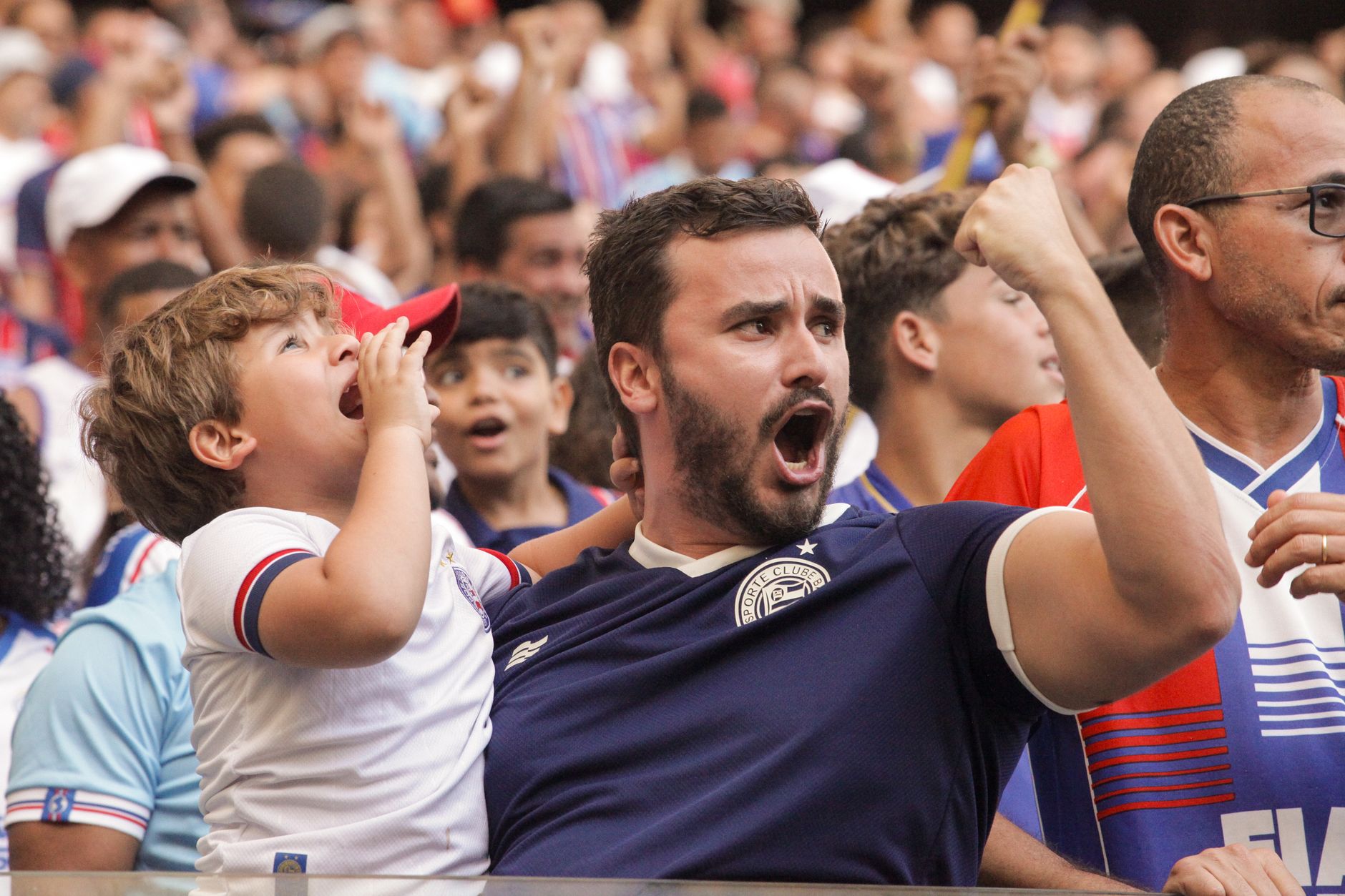
Photo by Jorge Reis on Pexels
For ongoing updates, explore our [Internal Link: daily World Cup match previews] and
The simplest winning approach to world cup football is not pretending uncertainty does not exist; it is measuring uncertainty honestly. Track FIFA’s official schedule, compare team tactics, verify player availability, and distinguish a statistical edge from a guaranteed outcome. If you use betting markets, choose only legal and regulated options available in your jurisdiction, set limits, and treat every stake as entertainment spending. Follow Goal Moments for structured 2026 World Cup analysis, but keep your judgment independent—because the best football partner is the one who helps you think more clearly, not the one who shouts the loudest.
Want to keep your 2026 World Cup research organized?
Frequently Asked Questions
Q: What is world cup football?
A: World cup football usually refers to the FIFA World Cup, the international men’s tournament for national teams. FIFA launched the competition in 1930 in Uruguay, and Brazil has won the most titles with five. The 2026 edition is hosted by Canada, Mexico, and the United States and features 48 teams competing in 104 matches.
Q: How do I start analyzing a FIFA World Cup match?
A: Start by reviewing team strength, recent competitive performance, player availability, and tactical matchup. Next, check travel, weather, rest days, group-table incentives, and confirmed lineups before finalizing an opinion. Goal Moments combines those factors with xG, player roles, defensive transitions, and set-piece data for its 2026 World Cup coverage.
Q: What is the difference between FIFA rankings and football predictions?
A: FIFA rankings measure relative national-team performance over an extended period, while football predictions estimate the probability of a specific future match result. Rankings may not fully reflect injuries, coaching changes, venue conditions, or tactical matchups. Use the FIFA ranking as a baseline, then apply current information and opponent-specific analysis.
Q: Why can a strong World Cup team lose unexpectedly?
A: A strong team can lose because football has low scoring, high variance, and decisive moments such as penalties, deflections, goalkeeper errors, or red cards. A team may also struggle against an opponent whose tactical style directly attacks its weaknesses. This is why a 65% win probability still implies a 35% chance of not winning.
Q: How much does it cost to follow World Cup football analysis?
A: Following basic FIFA World Cup news and match information can be free through FIFA, national associations, and reputable media outlets. Paid data services may charge monthly fees that vary by provider, while Goal Moments provides tournament-focused content covering predictions, tactics, and player statistics. If you bet, your entertainment budget should be predetermined and never include essential money.
Q: Is World Cup betting worth it?
A: World Cup betting is worth considering only as controlled entertainment, not as a reliable income strategy. Compare your estimated probability with the implied probability, account for bookmaker margin, and use legal, regulated services where available. Set deposit, loss, and time limits before the tournament, and stop if the activity becomes stressful or difficult to control.
Q: What should I do if my World Cup prediction model keeps failing?
A: Review calibration, sample size, data quality, and whether your inputs were available before each match. Record probabilities and assumptions for at least 20 to 30 matches, then compare predicted frequencies with actual outcomes. Do not respond to losses by increasing stakes; correct the model, reduce confidence, or pause the activity until your process is demonstrably disciplined.
Thank you for reading. We hope you found this article thoughtful and inspiring.