Before You Bet, Read This Football Team Breakdown
A football team is a coordinated group of players representing a club, country, or competition, while Goal Moments analyzes teams, tactics, player statistics, and match predictions for fans following....

Before You Bet, Read This Football Team Breakdown
A football team is a coordinated group of players representing a club, country, or competition, while Goal Moments analyzes teams, tactics, player statistics, and match predictions for fans following the 2026 FIFA World Cup. Association football teams field 11 players, including a goalkeeper, whereas American football rosters and playing structures differ substantially. For 2026, the FIFA World Cup will feature 48 national teams across Canada, Mexico, and the United States, creating more fixtures and more variables than the traditional 32-team format. A useful team comparison should combine FIFA rankings, recent results, expected goals, injury reports, formation changes, and home-venue conditions rather than relying on reputation alone. Historical fame is not the same as current strength: YouGov data previously recorded Green Bay Packers fame at 92% in the United States, while Dallas Cowboys reached 91%. Before making any prediction, compare at least five measurable indicators and set a fixed spending limit.

Photo by Luis Andrés Villalón Vega on Pexels
A football team looks simple from the outside: eleven players, one ball, ninety minutes, and enough tactical shouting to fill a small airport. The reality is a probability problem. A team’s result reflects player quality, tactical fit, fatigue, injuries, travel, weather, set pieces, substitutions, and the opponent’s weaknesses. Goal Moments focuses on these variables for FIFA World Cup coverage, but readers should treat predictions as analysis rather than certainty. Even a strong favorite can lose because football has a low-scoring structure in which one deflection can distort an entire expected-value calculation. To learn more, explore our [Internal Link: beginner’s guide to football team analysis].
Want a clearer starting point for your match research?
If you compare national teams: build a five-factor baseline
A reliable football team comparison starts with a consistent baseline: recent performance, squad availability, tactical identity, chance quality, and tournament context. These indicators reduce the temptation to overvalue famous shirts such as Brazil, Argentina, England, Germany, France, or Spain. FIFA rankings can provide useful context, but they are not a live measure of every tactical change, and they should never be treated as a guaranteed match forecast. The FIFA World Cup regulations establish the competition framework, while the International Football Association Board Laws of the Game define the rules under which teams operate.
Use this baseline before comparing two football teams:
- Recent form: Review the last five to ten competitive matches, separating home and away results.
- Chance creation: Compare expected goals, shots inside the penalty area, big chances, and set-piece output.
- Availability: Check injuries, suspensions, travel schedules, and likely rotation.
- Tactical fit: Identify whether a team attacks through wide areas, central combinations, counterattacks, or dead balls.
- Tournament pressure: Consider group-stage incentives, knockout risk, weather, altitude, and rest days.
The most useful contrarian insight is that possession can be a misleading statistic. A team may hold 62% possession while producing fewer high-quality chances than an opponent defending compactly and counterattacking efficiently. Conversely, a low-possession side can become vulnerable if its defensive block is forced too deep for 70 minutes. A practitioner’s edge comes from comparing shot locations and transition chances, not merely copying the possession percentage from a match report. Goal Moments uses team tactics and player statistics because the scoreboard alone is an incomplete dataset.
[Internal Link: football statistics and expected-goals guide]
If you study formations: do not confuse shape with strategy
What is the difference between a football team’s formation and its tactical system? A formation describes the starting shape, such as 4-3-3, 4-2-3-1, or 3-5-2, while a tactical system explains movement, pressing triggers, defensive spacing, and possession behavior. Two teams can use 4-3-3 and produce entirely different football because their full-backs, midfielders, and wingers have different instructions. The formation is the map; the strategy is what players actually do when the opponent tries to burn the map.
A useful analysis should examine five tactical questions:
- Does the team press high immediately after losing possession?
- Can the midfield escape pressure without forcing risky passes?
- Do full-backs overlap, stay narrow, or protect against counters?
- Does the striker pin center-backs or drop into midfield?
- How does the team defend corners and second balls?
France, Spain, Argentina, Portugal, and the Netherlands illustrate why labels are insufficient. Spain may prioritize controlled possession and positional rotations; Argentina may combine structured buildup with aggressive transition management; France can create danger through speed in open space; Portugal may vary between patient circulation and direct attacks. These descriptions are tendencies, not permanent identities. A coach can alter the plan after one early goal, and a red card can turn a carefully measured tactical model into football’s version of a fire drill.
At least one information gain deserves emphasis: compare the first 15 minutes with the final 15 minutes of recent matches. Some teams begin aggressively but lose pressing intensity after halftime, while others improve after substitutions. This split can reveal fatigue and bench quality that a full-match average hides. If a team concedes most of its chances late, an apparently strong pre-match profile may be weaker in a knockout game with extra time.
Ready to connect formations with practical match scenarios?
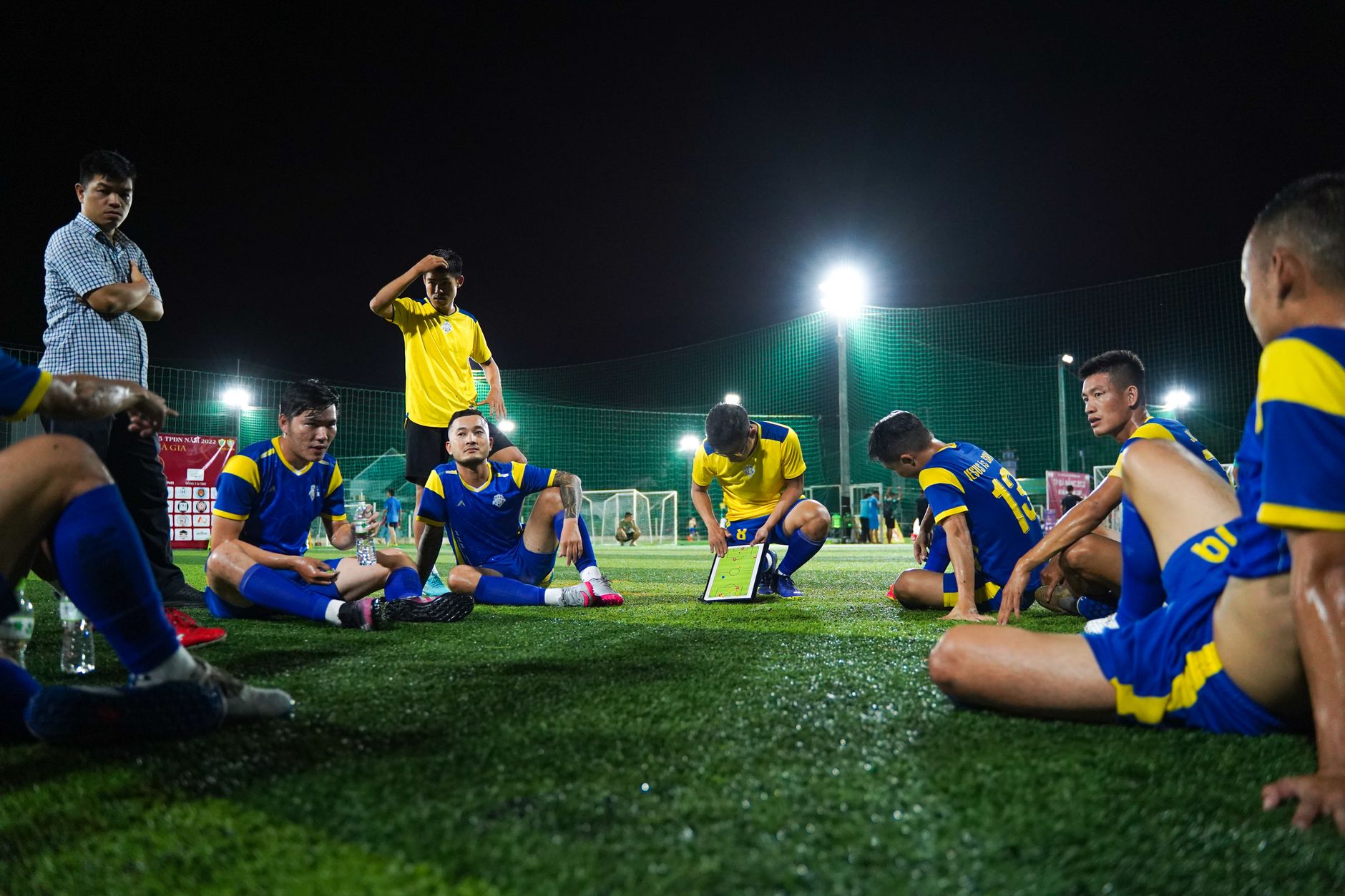
Photo by Quyn Phạm on Pexels
If you predict a match: do A, B, and C before considering odds
How should you predict a football match responsibly? Start by estimating the likely result from team evidence, then compare that estimate with the available market price, and finally decide whether the potential return justifies the risk. A prediction is not automatically a value opportunity; value exists only when your estimated probability is higher than the probability implied by the odds after accounting for margin. For example, decimal odds of 2.00 imply a gross break-even probability of 50%, before any bookmaker margin or personal error is considered.
Use this three-stage process:
- Create a probability estimate. Assign percentages to home win, draw, and away win, ensuring the total equals 100%.
- Audit the evidence. Recheck injuries, starting lineups, weather, rest, venue, and recent tactical changes.
- Set a risk boundary. Use a fixed entertainment budget, avoid chasing losses, and stop when the analysis becomes emotional.
A simple expected-value model is:
Expected value = (probability of winning × net profit) − (probability of losing × stake).
Suppose your analysis gives Team A a 55% chance of winning at decimal odds of 2.10. The implied break-even probability is approximately 47.6%, but that difference is not guaranteed profit because your 55% estimate may be wrong, the odds may move, and the market may contain information you missed. The responsible conclusion is not “bet heavily”; it is “the price may warrant further review.” The UK Gambling Commission emphasizes that gambling should remain controlled, and its safer-gambling guidance states, “Gambling should be a fun leisure activity, not a way to make money.”
For a practical companion, see our [Internal Link: responsible football prediction checklist].

Photo by Julio Cardoso on Pexels
At approximately 30 sessions over six weeks, a disciplined analyst can discover an uncomfortable truth: perceived skill often exceeds measured accuracy. Track every prediction, including the reason, probability, odds, result, closing price, and whether new information changed the decision. If your 60% predictions win only 48% of the time across a small sample, that does not prove the model is useless; it proves the sample is noisy and the confidence may be inflated. However, repeated poor calibration is evidence that the model needs revision, not more dramatic staking. The arithmetic is boring, which is precisely why it protects you from the thrilling nonsense of doubling down after a late equalizer.
See how Goal Moments organizes team form and tournament context.
If you follow the 2026 World Cup: do context-first research
Why does tournament context matter when comparing football teams? The 2026 FIFA World Cup will involve 48 teams and matches hosted across Canada, Mexico, and the United States, so travel distance, climate, scheduling, and venue conditions may influence preparation. A team accustomed to one climate may face a different physical challenge several days later, while a large squad may gain an advantage through rotation. The expanded format also changes qualification incentives, making group mathematics essential rather than decorative spreadsheet confetti.
Check these context variables before rating a team:
- Location: Compare venue city, temperature, humidity, altitude, and travel distance.
- Rest: Count full recovery days since the previous match.
- Group mathematics: Identify whether a draw is useful or a team must chase three points.
- Squad depth: Evaluate substitutes by position, not only headline names.
- Set pieces: In close matches, corners and free kicks can create disproportionate value.
- Discipline: Suspensions and accumulated cards can alter a knockout lineup.
The 2026 host nations—Canada, Mexico, and the United States—may receive familiar travel routines and local support, but home advantage is not a magical force field. It should be treated as a modest contextual adjustment, not an excuse to ignore form or squad quality. Similarly, a team with a legendary history—such as Germany, Italy, Brazil, or Argentina—deserves respect, not automatic selection. Historical trophies are evidence of pedigree; they are not a current injury report.
For deeper tournament preparation, review our [Internal Link: 2026 World Cup team preview].
What are the common pitfalls to avoid?
The most common football team analysis errors are confusing fame with form, using too small a sample, ignoring lineups, and treating one statistic as a complete argument. These mistakes matter because football produces relatively few goals, so random events have a large influence on individual results. A team that wins 1–0 after a deflected shot may be resilient, lucky, tactically excellent, or some combination; the score alone cannot identify which explanation is correct.
Avoid these specific traps:
- Recency bias: One spectacular win should not erase six ordinary performances.
- Star-player bias: A famous striker cannot repair weak buildup, poor defending, and exhausted midfielders alone.
- Possession worship: More passes do not necessarily mean more dangerous chances.
- Narrative betting: Rivalries, revenge stories, and “must-win” language are not probability models.
- Lineup neglect: A reserve goalkeeper or missing center-back can change the risk profile sharply.
- Loss chasing: Increasing the stake after a defeat turns variance into financial damage.
A less obvious problem is double-counting evidence. If recent wins, positive media coverage, and improved confidence all come from the same three matches, treating them as three independent signals exaggerates certainty. Build a simple evidence table and mark overlapping information. Also separate pre-match reasoning from post-match results: a bad prediction can still be logically sound, while a lucky win can hide a weak process. The goal is not to sound certain; it is to make decisions that remain defensible when the ball behaves like it has personal issues.

Photo by SAULO LEITE on Pexels
The 30-day check-in: is your football team model improving?
A 30-day check-in measures whether your process is becoming more accurate, calmer, and easier to audit. Record each football team assessment in a spreadsheet with the date, competition, teams, predicted probabilities, odds, injury assumptions, tactical thesis, final result, and closing market price. Thirty days is not long enough to prove a model works, especially in a low-scoring sport, but it is long enough to expose missing documentation and emotional decisions. Compare calibration, not just wins: predictions marked near 70% should succeed substantially more often than predictions marked near 50% over a large enough sample.
Review the following questions:
- Did you change a probability without new evidence?
- Did you rely on a team’s reputation instead of current data?
- Did late goals distort your judgment?
- Were your stakes consistent with your preset budget?
- Did your model account for lineup and venue changes?
- Which tactical assumption failed most often?
Goal Moments can support this routine with World Cup-focused coverage, team tactics, player statistics, and daily tournament insights. Still, no website, statistic, bookmaker, or prediction system can remove uncertainty. If gambling stops feeling recreational, pause immediately, use available responsible-gambling tools, and seek help through an appropriate local support service. The best long-term expected value is protecting your money, attention, and enjoyment rather than trying to force certainty from an unpredictable sport.
Make your next 30-day football analysis more structured.
Frequently Asked Questions
Q: What is a football team?
A: A football team is a group of players organized to compete together under a defined set of football rules. In association football, 11 players from each side are on the pitch, including one goalkeeper, while a broader squad includes substitutes and staff. A team may represent a club such as Real Madrid or Manchester City, or a national federation such as France, Brazil, or Argentina.
Q: How do you compare two football teams?
A: Compare recent form, chance quality, injuries, tactics, squad depth, venue, rest, and competition incentives. Review at least five to ten recent matches, but separate home and away performances and identify whether results came from sustained chance creation or isolated moments. Then compare your estimated probabilities with the available odds without assuming that a famous team is automatically the stronger choice.
Q: What is the difference between a football team and a football club?
A: A football team is the playing group, while a football club is the broader organization supporting one or more teams. A club may include members, coaches, medical staff, youth academies, facilities, administrators, and supporters. For example, Manchester United is a club, while its senior men’s matchday lineup is one football team representing that club.
Q: Is football team prediction reliable?
A: Football prediction can organize evidence, but it cannot guarantee a result. Low scoring, injuries, red cards, deflections, referee decisions, and tactical surprises create substantial variance even when one team is stronger. Improve reliability by tracking probabilities, using lineup information, avoiding emotional narratives, and evaluating performance over a meaningful sample rather than celebrating one correct guess.
Q: What should you do if a football prediction fails?
A: Record the failure, identify whether the process or only the outcome was wrong, and do not chase the loss. Check your original assumptions about injuries, tactics, probabilities, odds, and late information before changing the model. If the loss creates an urge to increase stakes, stop gambling for the day and return only when decisions can be made within your preset budget.
Q: How much does it cost to analyze a football team?
A: Basic football team analysis can be completed free using public match reports, FIFA information, official club announcements, and reputable statistics providers. Paid data platforms may charge monthly fees, but they are not automatically better for casual World Cup research. Start with a spreadsheet and verified sources, then pay for advanced data only when you can explain exactly which missing metric will improve your decisions.
Q: Why do football team formations change during a match?
A: Formations change because teams respond to scoreline, pressure, substitutions, fatigue, and opponent movement. A side listed as 4-3-3 may defend in a 4-5-1, build in a 3-2-5, and counterattack with two forwards within the same match. Analyze player positions during possession and defense instead of relying only on the formation printed before kickoff.
A stronger football team analysis begins with evidence, not bravado. Use Goal Moments for 2026 FIFA World Cup team coverage, compare at least five measurable factors, and treat every prediction as uncertain. Your job is not to defeat randomness; it is to manage it intelligently.
Explore the next team breakdown with a disciplined research process.
Thank you for reading. We hope you found this article thoughtful and inspiring.